A Living Spiritual Tradition
Sak yant — also written sak yan, or referred to as yantra tattooing — is a form of sacred tattoo practised across Thailand, Cambodia, Laos, and parts of Myanmar. It is a living tradition, not a historical curiosity, and the people who carry it today take it seriously.
The tattoos are not simply decorative. They are understood as spiritual tools: marks that carry blessings, offer protection, and create an ongoing relationship between the wearer and the practice. Approaching the subject honestly means starting there.
What Sak Yant Means
The term combines yantra — a Sanskrit word for a geometric diagram used in meditation and ritual — with the regional practice of inscribing those diagrams on the body. A sak yant is composed of sacred script, geometric grids, and often animal or deity figures that together form a single design.
The script is usually Khom, a Thai script descended from older Mon and Khmer writing systems, along with related variations used in Cambodia and Laos. Because the text is sacred rather than merely descriptive, the written form is treated with respect in its own right.
A Tradition Spanning Buddhist and Animist Roots
Sak yant draws from multiple layers of belief. Its Buddhist elements sit alongside older Animist traditions, and the two are not seen as contradictory by most practitioners. Rather, they are woven together: the blessing of a monk, the protection of a spirit, and the discipline of the wearer all belong to the same practice.
This is one of the reasons the tradition resists being flattened into a "tattoo style". It is a religious and cultural practice that happens to use tattooing as its medium, not the other way around.
The Mai Sak and Hand-Tapped Method
Traditional sak yant is applied by hand with a long metal rod called a mai sak. The rod ends in a sharp point, and the ajarn — the master who applies the tattoo — repeats a mantra with each tap as the design is worked into the skin.
The method is deliberate and rhythmic rather than fast. Compared with a machine tattoo it is slower, and the sensation is often described as a heavy, repeated tapping rather than a continuous sting. The pace is part of the experience; the mantra and the rhythm are inseparable from the tattoo itself.
The Ajarn and the Temple Setting
Sak yant is traditionally received from an ajarn — a master practitioner, often a former monk — or directly from a monk, frequently within a temple or at a shrine. The setting matters. The blessing, the ritual, and the obligations that accompany the tattoo are part of the exchange, not extras around it.
The person applying the tattoo typically decides or guides the design. It is not a menu. Because the marks carry specific meanings and specific commitments, the ajarn chooses what is appropriate for the wearer, and the wearer accepts it.

Rules and Observances for the Wearer
Part of what defines sak yant is that it is not a passive decoration. Many designs come with observances — the sin — that the wearer is expected to keep. These vary between ajarns, lineages, and designs, but typically include moral commitments and behavioural rules: refraining from certain actions, maintaining honesty, respecting elders, and observing precepts.
The specifics depend entirely on the particular design and teacher. Some traditions place further restrictions on behaviour that is considered to break the blessing.
This is important for anyone drawn to the imagery: the design is not the whole thing. The rules are part of it, and taking one without the other is a misreading of what the practice is.
Sak Yant in a Western Studio: The Difference
There is a clear and honest distinction to draw between receiving a traditional sak yant and getting a tattoo in that visual style in a Western studio.
A sak yant in its traditional form involves:
- A recognised ajarn or monk
- A hand-tapped application with the mai sak
- A blessing and a set of obligations
- A temple or shrine setting and a living cultural context
A sak yant-style tattoo in a studio involves:
- A machine-tattoo artist working from imagery
- A commercial exchange
- Aesthetic appreciation of the design
- No blessing, no lineage, and no rules attached
Neither is automatically wrong, but they are not the same thing, and it is misleading to present them as if they are. A studio can produce beautiful, respectful work inspired by sak yant geometry. It cannot perform the ritual, and an honest artist will say so.
The Cultural Appropriation Conversation
The question of cultural appropriation around sak yant is a live one, and worth engaging with without defensiveness or preaching.
On one hand, sacred and religious symbols have always travelled, and there is nothing inherently wrong with an outsider finding meaning or beauty in a tradition. On the other, sak yant is not a lost or abandoned craft. It is practised now, by specific communities, under specific rules, and treating its most sacred elements as free aesthetic material is a form of taking that those communities can experience as disrespect.
The most useful questions are simple:
- Would I be comfortable explaining what this design means, and where it comes from, to someone who belongs to that tradition?
- Am I taking the symbol without the obligations that come with it, and pretending that is the same as receiving it?
- Am I being honest that this is appreciation of an image rather than participation in a practice?
Honest answers there are worth more than any general rule.
Approaching Sak Yant Respectfully
If you are genuinely drawn to the tradition, the most respectful path is to understand it before you wear it. That means reading about the ajarns who practise it, the meanings of the designs, and the observances attached to them — and being candid that what you can realistically receive in Australia is a tattoo in the style, not the initiation itself.
If what you want is the blessing, the ritual, and the tap of the mai sak, then the tradition itself tells you where to look: Thailand, from a recognised practitioner, often within a temple. Some designs, particularly those tied to specific lineages or protective traditions, are considered off-limits for outsiders entirely. Choosing respectful alternatives honours the tradition rather than diluting it.
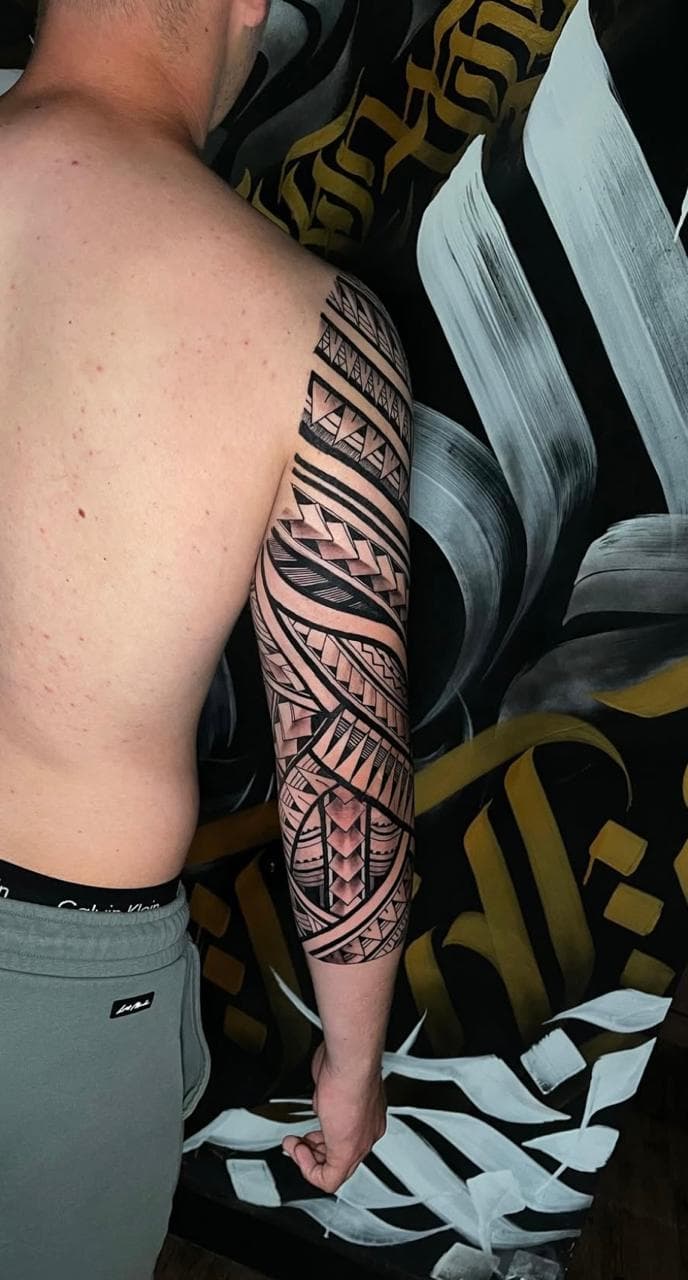
For many people, the stronger choice is work that draws on the geometry, the grid structure, and the rhythm of sacred script while remaining openly a tattoo rather than a claim to a blessing. That kind of composition can be deeply personal without overreaching. Our guide to spiritual and religious tattoos explores some of those alternatives, and the same care applies to other traditions with living rules — much as it does with Polynesian design.
Starting a Conversation About Sacred Imagery
If you want to explore sak yant-inspired work, bring your questions as well as your references. An honest artist will tell you what a studio can and cannot offer, what the imagery traditionally means, and where the limits of the style are.
At Felicidad Tattoo Studio, work drawn from sacred traditions is approached with respect for its origins and an honest account of what it is and is not. If a design carries meaning that belongs to a living practice, that context is part of the design brief — not something to sweep aside for the sake of a striking picture. You can see the range of work we take on through our services page.