Why People Choose Spiritual Tattoos
For many people, a tattoo is not simply decorative — it is devotional. Spiritual and religious tattoos have existed across virtually every culture that has practised tattooing, from the protective markings of Polynesian tradition to the pilgrimage tattoos of Christian communities in Jerusalem to the sacred geometric patterns of Hindu and Buddhist art.
Today, people choose this imagery for a wide range of reasons: personal faith, cultural heritage, philosophical alignment, or simply a deep connection to the symbolism these figures and forms carry.
Common Traditions and Their Imagery
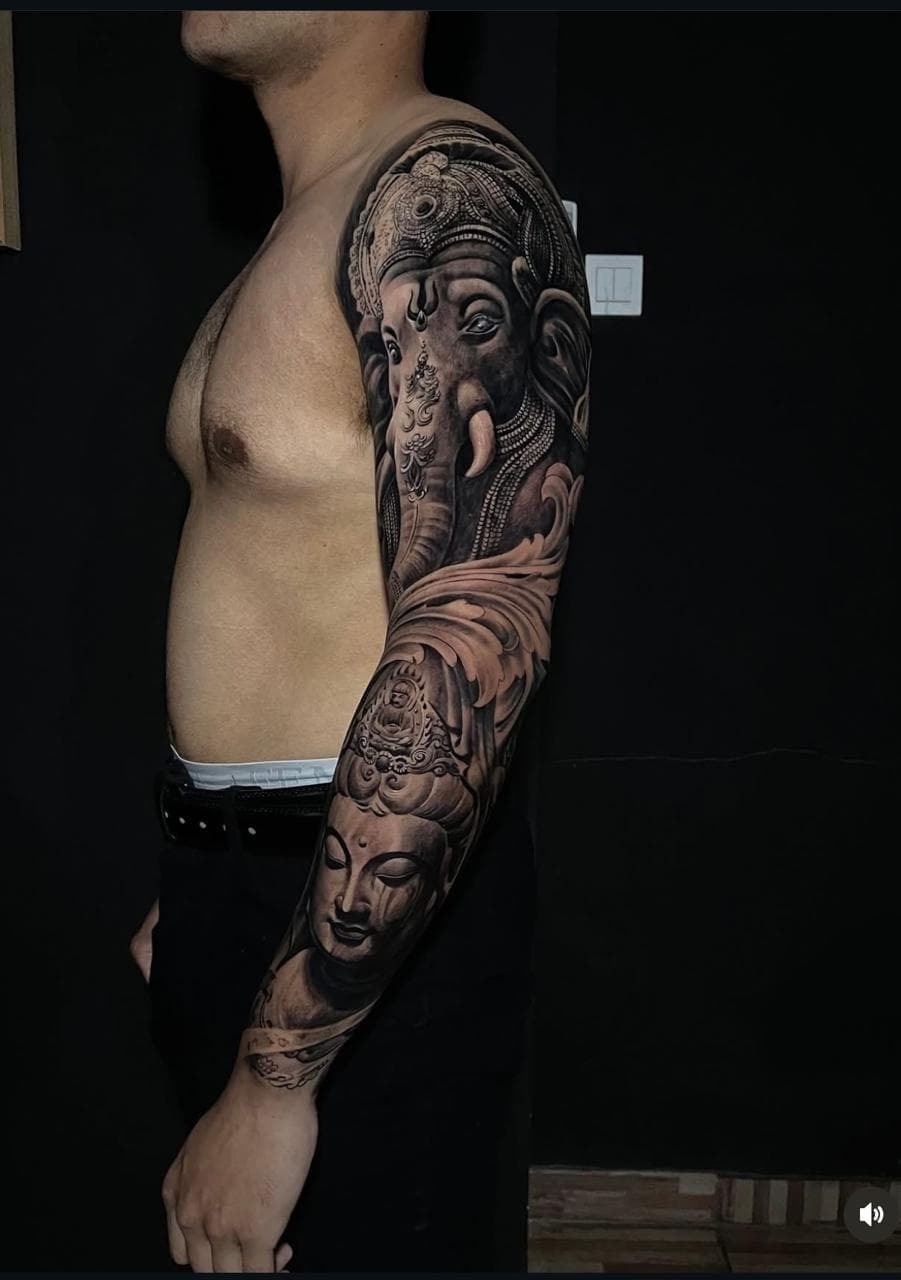
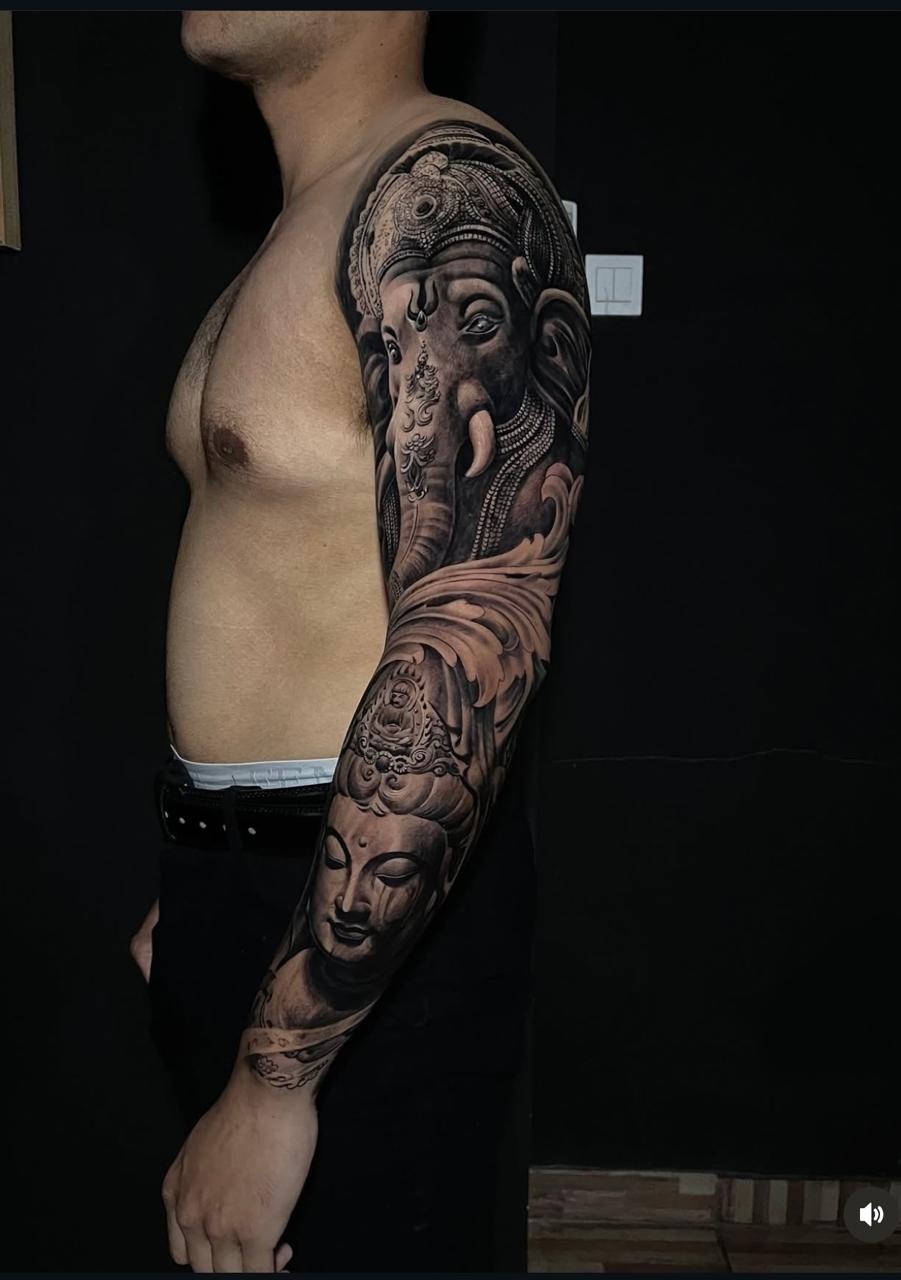
Hindu and Buddhist iconography is among the most frequently requested in tattoo studios. Figures like Ganesha, the remover of obstacles, and the Buddha in meditation carry layered meaning — and in skilled hands, they can be rendered with extraordinary detail and reverence.
Christian imagery — sacred hearts, crosses, the Virgin Mary, angels, and passages of scripture — remains perennially significant. The style can range from classical realism to bold traditional to fine line minimalism.
Pagan and Norse traditions have seen a major resurgence of interest. Runes, Yggdrasil, Mjölnir, and figures from Norse mythology carry both spiritual and cultural resonance for many people.
Japanese spiritual imagery — oni, bodhisattvas, dragons, and lotus motifs — is deeply embedded in the history of Japanese tattooing, where the relationship between body art and spiritual practice has always been close.
Questions of Cultural Respect
When the imagery you are drawn to comes from a culture different from your own, it is worth having an honest conversation with your artist about context. This does not mean certain imagery is off-limits — but it does mean understanding what you are choosing.
Some things to consider:
- Is the imagery sacred or secular? Certain figures hold deep religious significance that may be understood differently in their culture of origin
- How will you represent the imagery? Context, accuracy, and intention matter
- Are you drawn to the meaning or only the aesthetic? Both are valid starting points, but they lead to different conversations with your artist
The goal is not to police personal expression, but to ensure your tattoo is something you can wear with full understanding and without inadvertently causing offence.
Choosing a Rendering Style
Spiritual subject matter works across a wide range of tattoo styles:
- Black and grey realism excels at rendering figures with devotional intensity — portraits of religious figures can carry genuine reverence
- Traditional and neo-traditional approaches give sacred imagery a bold, icon-like quality
- Fine line renders mandalas, geometric sacred symbols, and script with elegant restraint
- Japanese tattooing has its own established visual vocabulary for spiritual figures that is worth exploring if that tradition is relevant to your imagery
Working With Your Artist
Bring reference images that reflect the specific tradition and visual approach you want. If the imagery comes from a tradition you practise, share what the figure or symbol means to you personally — this context often shapes how an artist approaches the design.
Be open to your artist's guidance on composition and placement. A figure like Ganesha or a complex mandala-based composition will have natural sizing and placement requirements that your artist can advise on.
At Felicidad Tattoo Studio in Darwin, we approach spiritual tattoos with care and craft. Book a consultation to talk through your ideas.