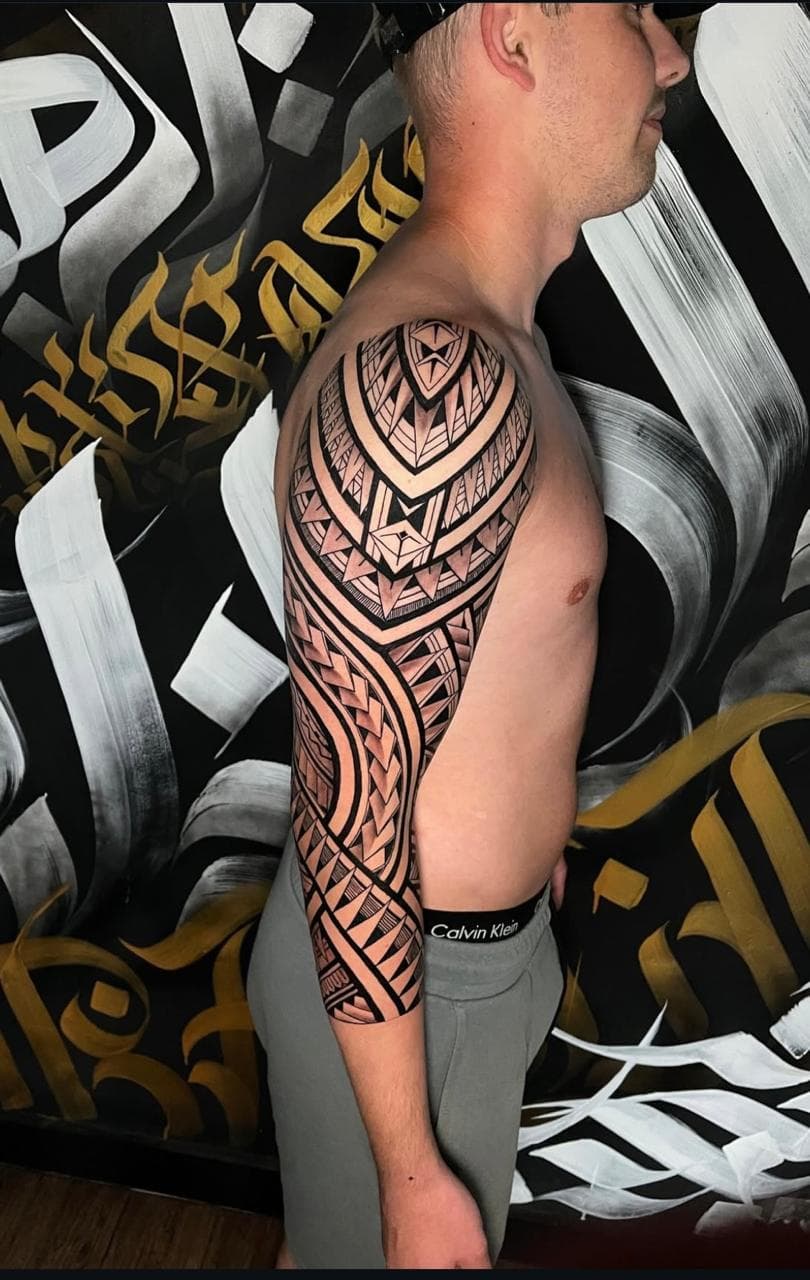
A Living Tradition
Polynesian tattooing — encompassing Samoan, Māori, Hawaiian, Marquesan, and Tongan traditions among others — is not simply a decorative style. It is one of the world's oldest and most culturally significant tattoo practices, with roots stretching back over 2,000 years.
In Polynesian cultures, tattoos were not personal choices made for aesthetic reasons. They were marks of identity, status, lineage, and spiritual protection — earned through ceremony, applied by dedicated practitioners, and read like a biography by those who knew the language of the designs.
Understanding this context doesn't mean you can't be inspired by Polynesian design. But it does shape how you approach it.
The Design Language
What immediately distinguishes Polynesian tattooing is its geometry. Unlike Japanese or Western traditional styles that centre on representational imagery, Polynesian work is built from abstract motifs — precise, interlocking patterns that tile across the body in structured bands or flow organically to fill larger areas.
Key Motifs
Enata — a human-like figure representing people, relationships, and the divine. Can symbolise the wearer, ancestors, or gods depending on context and placement.
Ocean waves — a fundamental element representing the sea, travel, change, and the connection between islands and peoples. Waves are among the most universally used Polynesian motifs.
Tiki — protective ancestral figures. Tikis are used to ward off danger and call on the power of ancestors.
Shark teeth (niho mano) — rows of triangular points representing adaptability, guidance, and protection. One of the most recognisable Polynesian motifs across multiple island traditions.
Turtle shell (honu) — fertility, longevity, and navigation. The sea turtle is a sacred animal across Polynesian cultures, representing the navigator who finds his way home.
Sun — eternity, leadership, and the brightness of life.
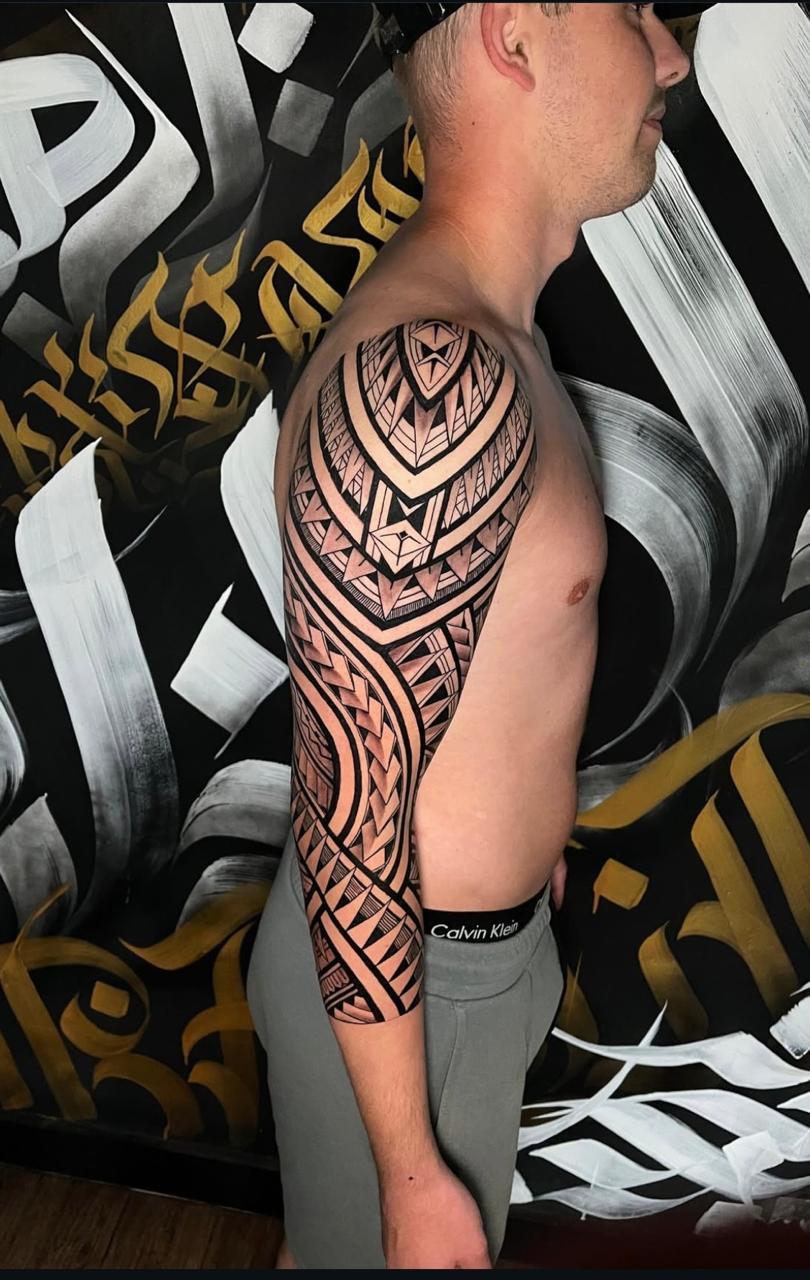
How the Body Is Used
Polynesian compositions are designed to wrap the body — following its contours, emphasising muscle, and reading clearly in motion.
Traditional placements include:
- Full or half sleeves — the arm is one of the most natural canvases for Polynesian band work
- Leg pieces — from the thigh to the calf, often echoing sleeve compositions
- Chest and shoulder panels — commonly radiating outward from the sternum
- Back pieces — large-scale compositions that use the full back as a single canvas
- Calf panels — standalone pieces with strong vertical structure
The geometry of Polynesian tattooing means it adapts well to most body types. The patterns naturally enhance muscular definition and flow with movement.
Black and Grey vs. Solid Black
Traditional Polynesian tattooing uses solid black — dense, unwavering, striking. This is still the most authentic approach and the one that tends to age best over time.
Some modern interpretations incorporate grey shading to add depth and dimension to elements within the composition. This isn't traditional, but it can work well when executed thoughtfully.
If authenticity matters to you, discuss this with your artist and express a preference for solid black work.
Approaching the Style Respectfully
The question of cultural respect around Polynesian tattooing is real and worth engaging with honestly.
The key distinction is between:
- Inspired by Polynesian visual language — using the geometry, the motifs, and the compositional logic to create something that honours the tradition
- Appropriating — claiming specific cultural markings that carry earned status, misrepresenting their meaning, or treating sacred designs as costume
At Felicidad Tattoo Studio, we approach Polynesian work as artists deeply respectful of the tradition. We'll help you build a composition that draws authentically from Polynesian design principles while being meaningfully personalised to you.
Starting Your Polynesian Design
Before your consultation, consider:
- Which island tradition resonates most with you — Samoan, Māori, Marquesan, or a broader pan-Polynesian aesthetic
- Whether you want a traditional solid black execution or a modern interpretation
- The placement and scale you have in mind
- Any personal symbols or meanings you'd like incorporated
Polynesian tattooing rewards patience in the design phase. A well-considered composition, built to last, is worth taking the time to get right.