A Tradition Over 5,000 Years in the Making
Japanese tattooing — known as Irezumi — is one of the oldest continuous tattoo traditions on earth. Its roots reach back thousands of years, but the style as we recognise it today was refined during Japan's Edo period (1603–1868), when woodblock print artists began applying their craft to skin.
The result is a style that balances bold structure with flowing organic detail — instantly recognisable, deeply symbolic, and technically demanding.
The Visual Language
What makes Japanese tattooing distinctive isn't just how it looks, but what it communicates. Every element carries meaning, and compositions are built deliberately to tell a story or embody a quality.
Common Motifs and Their Meanings
Koi fish — perseverance and strength. Koi swim upstream against powerful currents, making them a symbol of determination and transformation. The direction of the koi often carries additional meaning.
Dragons — wisdom, protection, and power. Japanese dragons differ from their Western counterparts — they are typically benevolent forces of nature, bringing rain and good fortune rather than destruction.
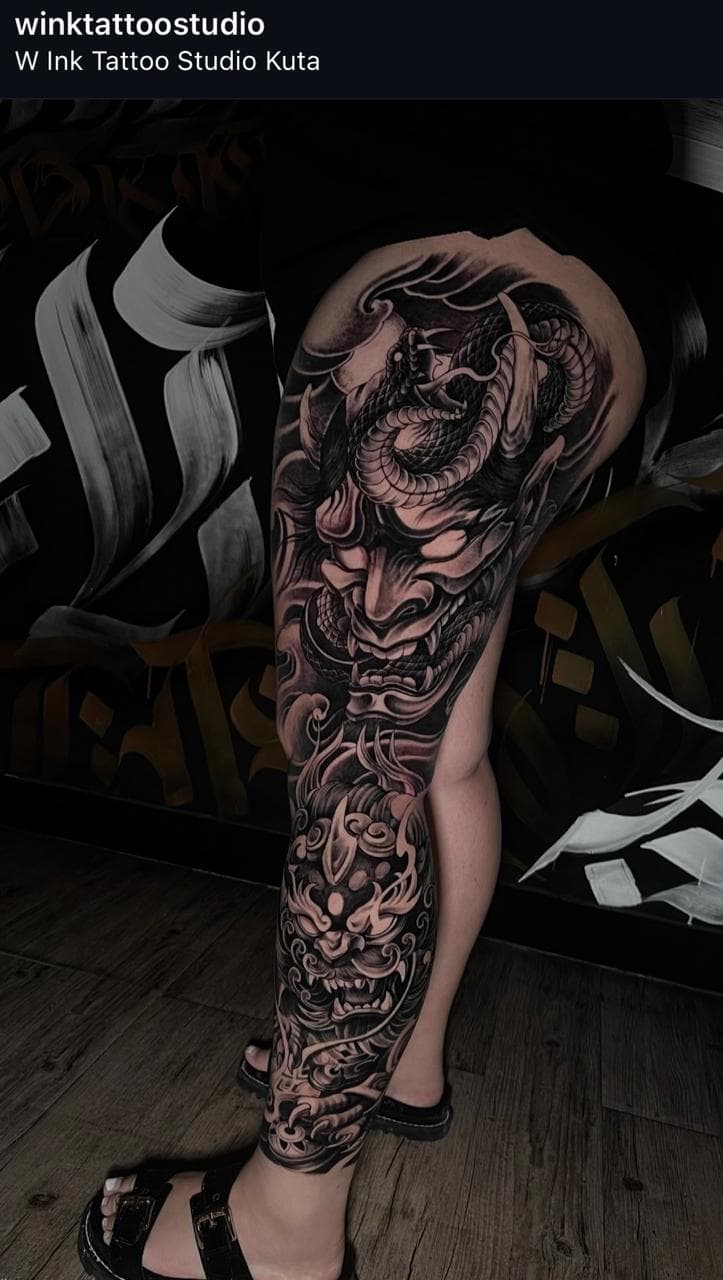
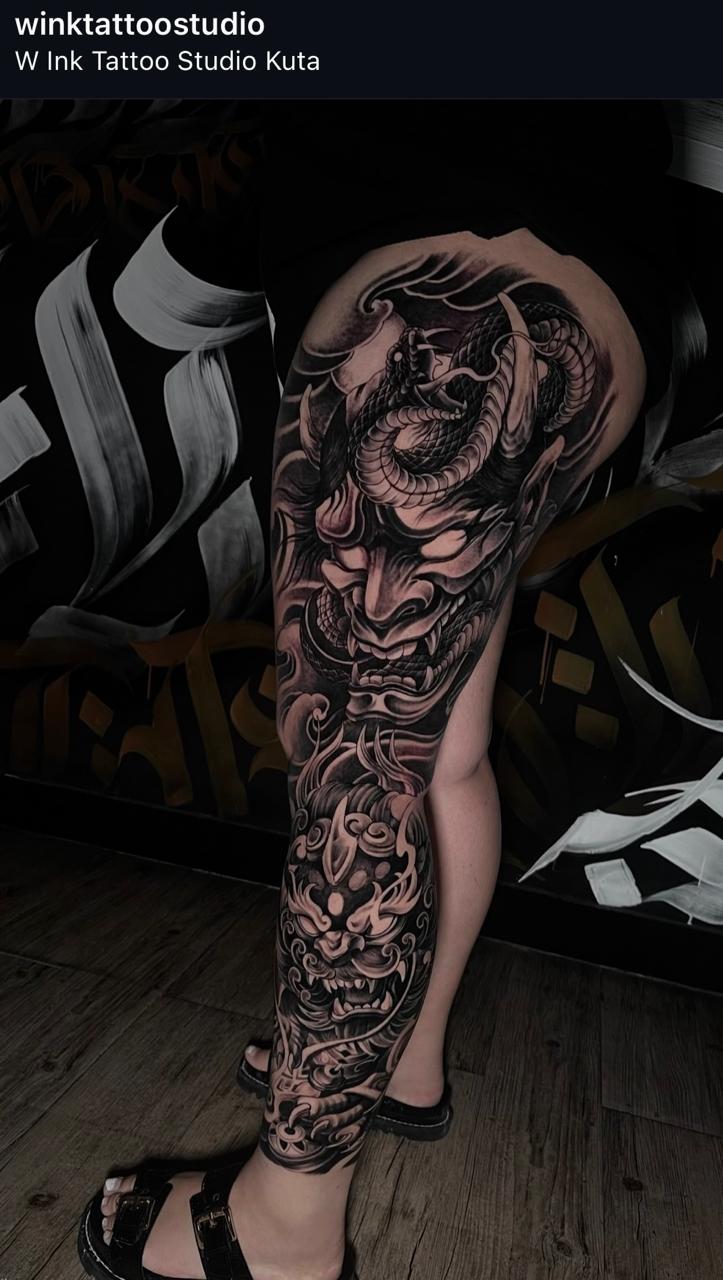
Hannya mask — a complex symbol representing jealousy, sorrow, and a woman consumed by obsessive emotion. Despite its fearsome appearance, the Hannya is also used as a protective talisman against evil spirits.
Tigers — courage and ferocity. The tiger is a natural pairing with the dragon in Japanese iconography — representing the balance of earthly and spiritual forces.
Peonies — prosperity, honour, and good fortune. Often used as a background element or to fill negative space in sleeve and bodysuit work.
Snakes — transformation, regeneration, and protection. The shedding of a snake's skin makes it a symbol of renewal and healing.
How It's Structured
Japanese tattoos are designed to work with the body rather than simply on it. The composition follows the natural curves of the arm, leg, or torso — wrapping and flowing rather than sitting flat.
Key structural elements include:
- Ikizukuri (background fill) — clouds, waves, wind bars, and florals fill the space around the central subject, creating depth and movement
- Outlined forms — bold, clean outlines define every element clearly
- Colour or black and grey — traditional Japanese work uses vibrant colour (red, black, grey, gold, green, blue); black and grey interpretations maintain the same structural principles
A well-executed Japanese piece considers the body as sculpture. Negative space is used intentionally. Subjects face in directions that flow naturally with movement.
Japanese vs. Neo-Traditional
Neo-traditional Japanese tattooing takes the same motifs and structural logic but applies a more illustrative, stylised rendering — bolder saturation, exaggerated proportions, and a more graphic feel.
Both are valid and beautiful. Traditional Japanese tends toward more classical rendering and tighter adherence to convention. Neo-traditional allows for more creative interpretation while still honouring the vocabulary of the style.
If you're unsure which suits you, bring reference examples and discuss the difference with your artist.
Placement Considerations
Japanese designs traditionally work best on larger canvases:
- Sleeves (half or full) are the most common placement
- Leg sleeves from thigh to calf
- Chest and back panels — the back is considered the most prestigious placement in traditional Irezumi
- Thigh panels for standalone pieces
Smaller Japanese-style pieces — a single koi on the forearm, a mask on the calf — can work beautifully too, as long as the composition is designed for that scale.
Starting a Japanese Piece
Before your consultation, consider:
- Which motifs resonate with you, and why
- Whether you want colour or black and grey
- The placement and how much space you want to dedicate
- Whether this will be a standalone piece or part of a larger project
At Felicidad Tattoo Studio, we work extensively in Japanese and neo-traditional Japanese styles. Bring your ideas and we'll help you build something rooted in the tradition while feeling entirely your own.