Why Tattoos Fade (and It's Not Always Poor Care)
Every tattoo fades over time. The skin is a living organ that constantly renews itself, and the ink that was deposited just below the surface slowly breaks down and is carried away by the body's lymphatic system. That process takes decades, not months, but the initial settling period in the first year is when most of the visible change happens.
A tattoo that looks saturated and sharp the day it was done will naturally lose about 15–25% of its density as the outer layers of skin heal and renew. This is completely normal. A touch-up session is how we put that lost density back.
When Does a Tattoo Actually Need a Touch-Up?
Not every tattoo requires one. Here's what to look for at the 6-week mark, once your tattoo is fully healed through all skin layers:
Yes, touch up if:
- There are visible patchy areas where the ink simply didn't take — usually spots that were over-scabbed or where the skin reacted particularly strongly
- Lines that have blown out or softened to the point of looking blurry — common in areas of high movement like inner elbows, wrists, and ribs
- Colour shifts where one section healed significantly lighter than the rest
- Small gaps or skipped spots your artist missed on the first pass
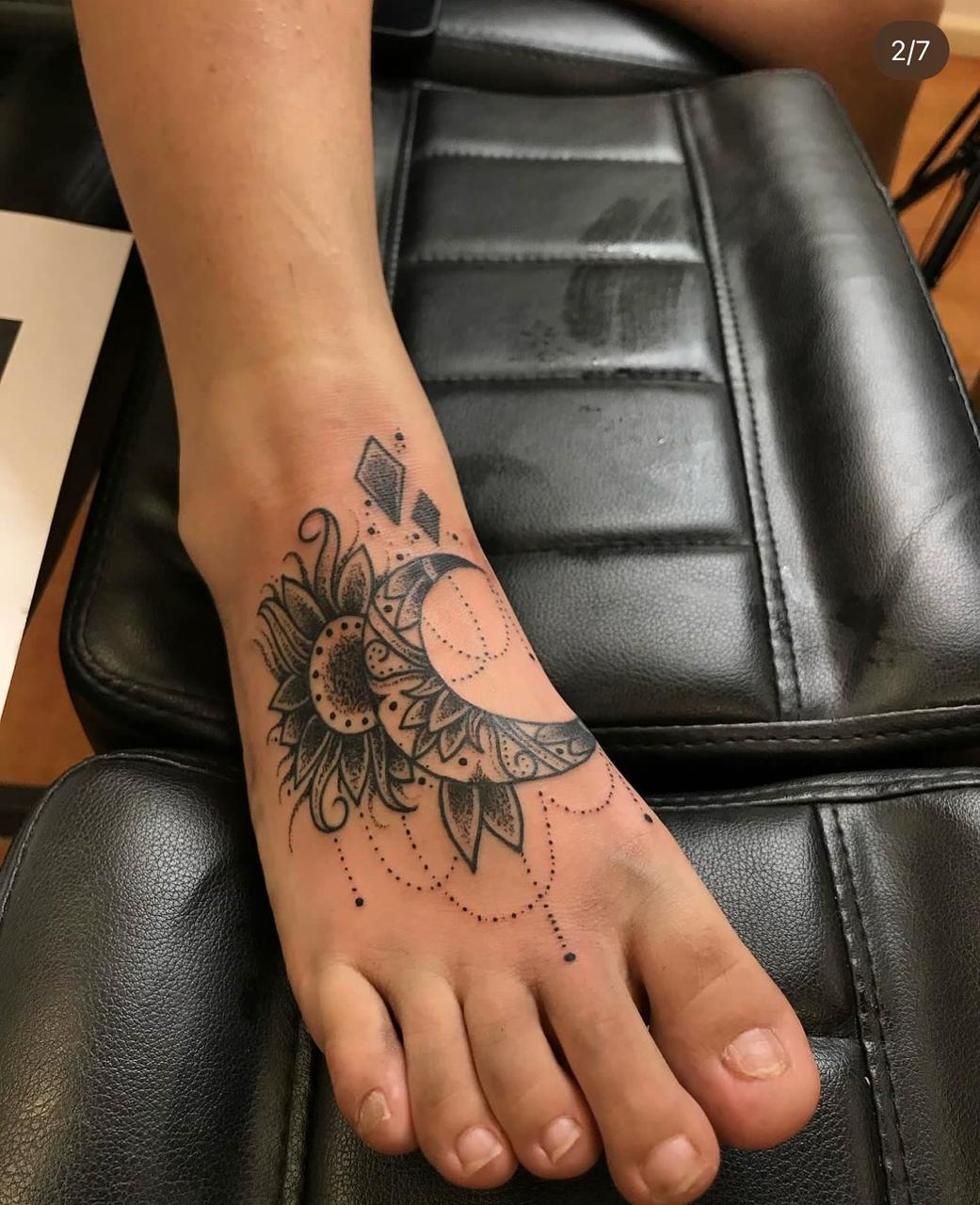
- Placement on hands, fingers, feet, or neck — these areas almost always need at least one touch-up, no matter how good your aftercare was
Probably don't touch up if:
- The tattoo just looks slightly softer than it did fresh — that's normal healed skin, not something that needs fixing
- You want it "just a little darker" overall — wait a full year. The deeper layers continue settling for months, and jumping in too early can cause over-saturation
- You're comparing it to other people's fresh tattoos online — those photos show peak saturation, not what that piece will look like a year later
The Ideal Timeline
The earliest we recommend a touch-up is 6 weeks after the initial piece. But there's no rush:
- 6 weeks to 6 months is the sweet spot. The skin is fully healed, but hasn't been exposed to years of sun or stretching, so matching the original ink is easier.
- 6 months to 2 years is still fine. We can match the tone, though we may need to do slightly more work to bring the existing ink and new ink into alignment.
- 2 years+ is more of a refresh than a touch-up. We'll likely go over the entire piece rather than just patching areas, and we may recommend a slightly adjusted approach to make sure everything reads as a cohesive whole.
What Happens in a Touch-Up Session
A good touch-up is not a full re-tattoo. It's targeted, precise work.
- Consultation first — we look at the piece, we compare it to photos from the day it was done, and we talk through what's bothering you and what's just normal settling. Sometimes what you think needs fixing is just the tattoo settling into skin, and we'll tell you honestly if touching it up would be unnecessary or even make it worse.
- Mapping the areas — we mark or photograph exactly which sections need attention. This is usually less than 30% of the total piece.
- The session itself — we work only on the areas that need it. A typical touch-up takes 30 to 90 minutes, depending on the size of the piece and how much needs work. We don't re-tattoo healthy, well-healed sections unnecessarily — that just puts extra trauma on skin that's already fine.
- Same aftercare rules apply — treat the touched-up areas exactly as you treated the original piece for the first 10 days.
Who Pays for a Touch-Up?
At Felicidad, our policy is straightforward:
- Within 3 months of the original piece — touch-ups for patchy healing, skipped spots, or issues that fall under normal healing variance are complimentary. We stand behind our work.
- 3 months to 1 year — touch-ups are at a reduced rate. We're still invested in the piece being right, but it's been long enough that lifestyle factors (sun, friction, skincare) start to play a role.
- Beyond 1 year — touch-ups are billed at the artist's normal hourly rate. At that point we're doing a refresh, not fixing a healing issue.
There are exceptions. If the touch-up is clearly needed because of aftercare mistakes — swimming too soon, picking scabs, applying products we advised against — we'll be upfront about that and charge accordingly. Our goal is transparency, not surprises.
How to Avoid Needing a Second Touch-Up
The single best way to make a touch-up last is to do better aftercare the second time around — and the single best way to never need one at all is to nail aftercare from day one.
Aftercare for touch-up sessions specifically:
- Be extra careful around the re-worked areas. New ink on top of old ink can be slightly more reactive.
- If your artist taped or wrapped the area, leave it on for the full recommended time — don't peek early.
- Moisturise more carefully than you did the first time. A consistent thin layer twice a day, no exceptions.
- Keep the sun off for 6 weeks minimum. If the tattoo is somewhere exposed, wear loose long sleeves or a high-SPF mineral sunscreen after the skin is fully closed.
Sun protection is the big one
UV exposure is responsible for about 80% of long-term tattoo fading. If you keep a fresh tattoo out of direct sun for the first 3 months, and use SPF50+ on it every single day after that, you'll delay the need for a full refresh by years. Sunscreen on a tattoo is not optional if you want it to look like it did the day you got it.
When It's Time for a Full Refresh, Not a Touch-Up
A touch-up fixes a healing issue. A refresh is what you do when a tattoo is 5, 10, or 20 years old and the overall clarity has faded. If your tattoo is more than a few years old and:
- The lines have noticeably softened across the whole piece
- The colour looks dull or washed out everywhere, not just in spots
- You can see skin tone showing through areas that used to be solid
Then you're looking at a full refresh — essentially going over the entire piece, sometimes with subtle adjustments to the design to account for how the skin has changed over time. A refresh is a bigger investment than a touch-up, but it can bring a tattoo back to looking like the day you got it.
Tattoos are permanent, but they're not completely maintenance-free. A single touch-up session within the first year can add years to how great your piece looks. If you're on the fence about whether yours needs one, just come in for a free check. We'll tell you honestly what needs work — and what's better left alone.