Yes, But It Depends
Tattooing over stretch marks is absolutely possible, and it's something artists do regularly. That said, stretch marks behave differently from unscarred skin, and the result depends on a few key factors: the age of the marks, their texture, and the tattoo style you choose.
Understanding these variables will help you make an informed decision and have a realistic conversation with your artist.
Old vs. New Stretch Marks
The age of your stretch marks matters.
Fresh stretch marks are typically red, pink, or purple in colour. The skin is still actively repairing itself, which means tattooing over them at this stage is not recommended. The tissue is fragile, the ink won't settle predictably, and the results are likely to be uneven.
Mature stretch marks — those that have faded to white, silver, or a skin-tone colour — are much more suitable for tattooing. The tissue has fully healed, and while it has a different texture than surrounding skin, it can hold ink reasonably well.
As a general guide, wait at least 12 months after stretch marks appear before tattooing over them.
How the Texture Affects the Work
Stretch marks are a form of scar tissue. The skin fibres have been disrupted, which means the surface isn't perfectly smooth or consistent. Ink can behave differently in this tissue compared to normal skin — it may spread slightly, absorb unevenly, or fade faster in certain areas.
An experienced artist accounts for this when designing and executing the tattoo. Some marks blend remarkably well into the finished piece; others remain faintly visible. In most cases, the tattoo still looks excellent — the marks simply become part of the canvas rather than a distraction.
Which Tattoo Styles Work Best
Not every style handles stretch marks equally well.
Bold designs with strong outlines tend to work best. The defined lines create structure that naturally draws the eye and masks texture variation beneath.
Fine line and highly detailed realism can be more challenging — subtle gradients and delicate linework are more sensitive to skin texture inconsistencies.
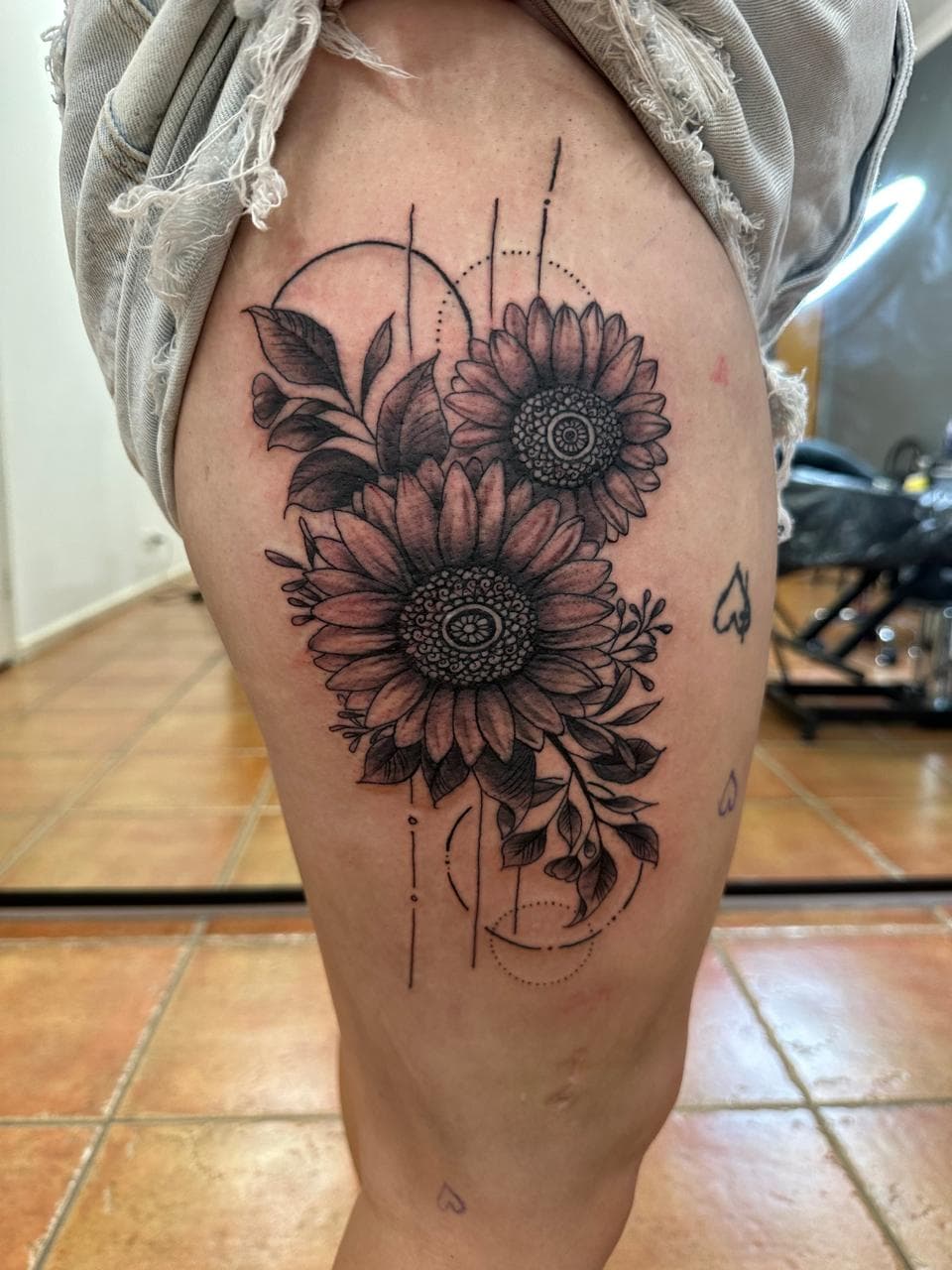
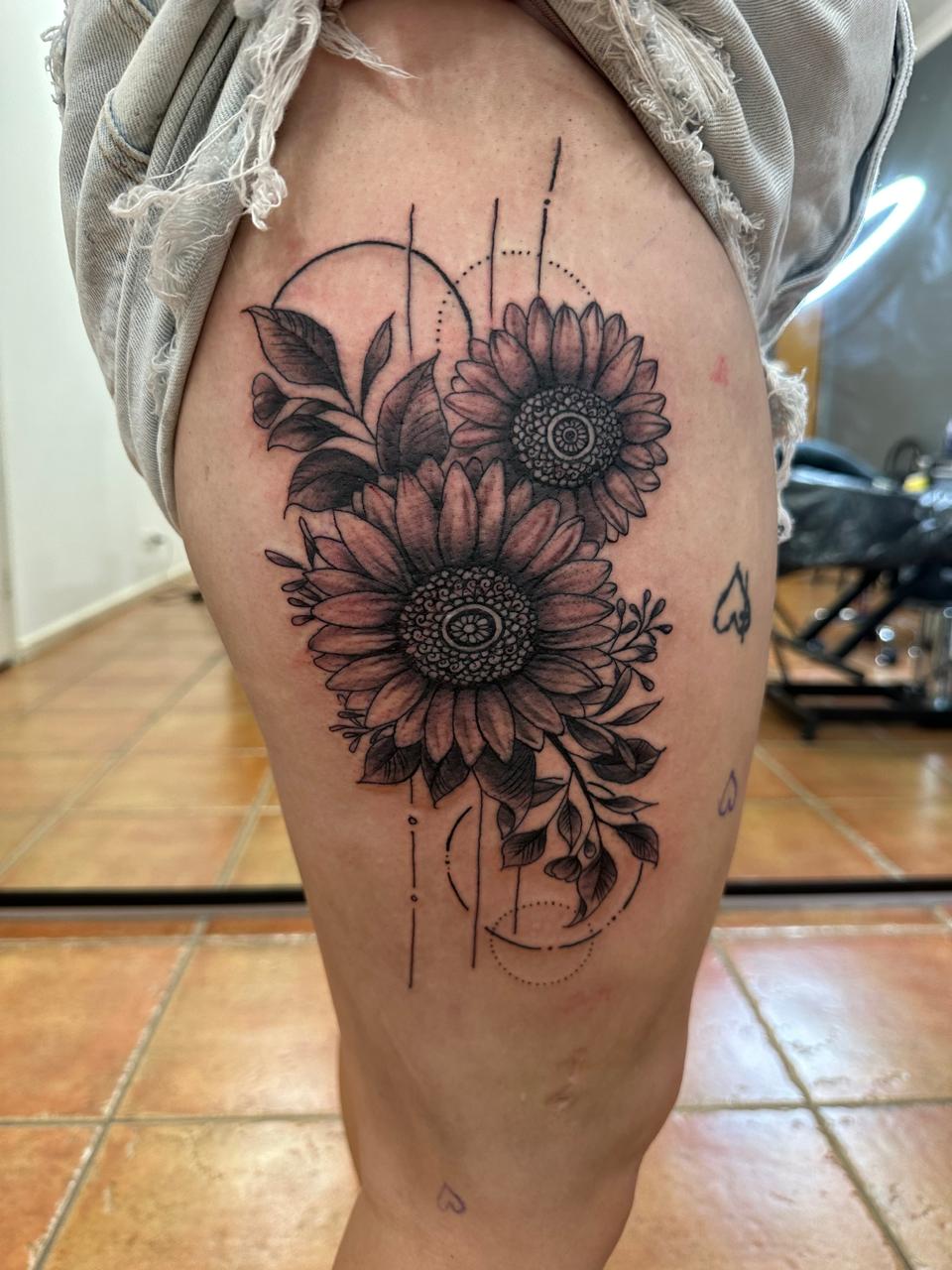
Cover-up-oriented styles like blackwork, geometric, or botanical designs work particularly well over stretch marks on the thighs, hips, abdomen, or shoulders.
The best approach is to bring your idea to your artist and let them design with your specific skin in mind.
What to Tell Your Artist
Don't hide your stretch marks during the consultation. A good artist will want to see the area, assess the texture and extent of the marks, and adjust the design accordingly.
Some key things to discuss:
- The age of the marks and whether they're fully healed
- Your skin tone and how it affects visibility
- Whether you want to mask the marks entirely or simply tattoo over them
- Realistic expectations for how the finished piece will look
The Result
Many clients are genuinely surprised by how effectively a well-designed tattoo transforms the appearance of stretch marks. The marks don't disappear — but once surrounded by a strong composition, they often become completely invisible to the casual eye.
At Felicidad Tattoo Studio, we approach every canvas as unique. If you're curious about tattooing over stretch marks, book a consultation and we'll walk you through exactly what's possible for your specific situation.