The Realism Challenge
Portrait work is the area where tattooing most closely meets fine art. A successful realistic portrait doesn't just look like the person or animal — it captures expression, texture, and that indefinable spark of recognition. When it's done well, nothing in tattooing is more impressive or more personal.
But realism is unforgiving. Slight mistakes in proportion that would pass in an illustrative piece become instantly obvious in a portrait. That's why getting a great result starts long before you sit in the chair — with choosing the right image and the right artist.
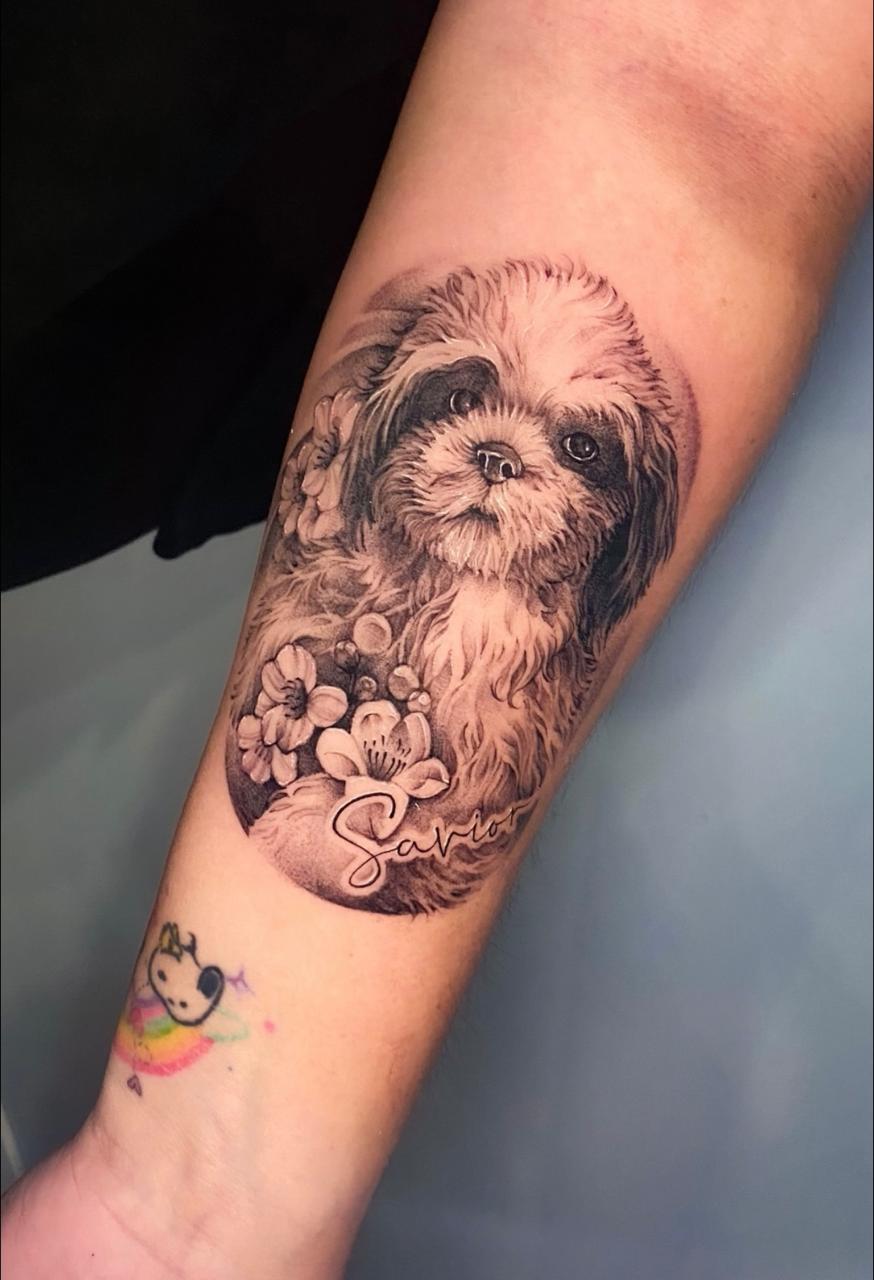
Choosing Your Reference Photograph
The reference photo is at least half the battle. Even the best realism artist can't pull a great portrait from a bad photo.
What makes a good reference:
- Well-lit, not overexposed — natural daylight at mid-morning or late afternoon is ideal. Flash photos blow out detail and flatten shadows.
- Sharp focus on the key features — eyes, nose, mouth, and cheek structure need to be clearly defined. Blurry phone selfies rarely work.
- Natural expression — the photo should look like them. A forced smile or an uncharacteristic pose will give you a tattoo that never quite feels right.
- High resolution — send the original file, not a compressed WhatsApp or screenshot. We need every pixel.
- Front-facing or slight three-quarter angle — full profile portraits are harder to read on skin and tend to lose recognition value over time.
What to avoid:
- Old, faded, or scratched photographs (though we can work from them if they're the only option — it just takes longer)
- Heavily filtered images — the colours and contrast don't translate
- Group photos where we have to isolate a face — the proportions are usually off
- Photos taken with a wide-angle lens from close up — noses and foreheads will be distorted
Bring more than one photo. If we have three or four good shots to cross-reference, we can make sure the likeness is solid rather than copying a single expression from a single moment.
Size and Placement: Realism Needs Room
Realistic detail can only be compressed so far before the skin starts to smooth it out. This is the single most common mistake people make with portrait tattoos — asking for too much in too small a space.
Minimum sizes by subject:
| Subject | Minimum size | Better size | |---|---|---| | Pet portrait (face only) | 10cm tall | 15cm+ tall | | Human portrait (face only) | 12cm tall | 18cm+ tall | | Bust portrait (head + shoulders) | 20cm tall | 25cm+ tall | | Full figure portrait | 30cm+ tall | 40cm+ tall |
Best placement options:
- Upper arm / bicep — the gold standard for portrait work. Flat, stable skin with minimal movement and stretching.
- Thigh — large, smooth area with good skin quality. Ideal for larger portraits and bust pieces.
- Calf — works well for vertical compositions. Less movement than the forearm.
- Ribcage / side — beautiful for display, but be aware that the skin stretches with breathing and weight changes, so fine detail may soften over years.
- Forearm / inner arm — possible, but the inner arm is thinner and the skin moves more. Ask your artist if your specific design will hold up there.
Placements to think twice about:
- Hands and fingers — detail is lost very quickly to sun exposure and constant wear
- Neck — high movement area and very visible; make sure you're absolutely certain
- Feet and ankles — friction from shoes and socks causes rapid fading and blurring
Black and Grey vs Colour: Which is Better for Realism?
Both approaches work, but they have different strengths and lifespans.
Black and grey realism
- Ages better — grey washes fade more evenly than colour pigments, and the contrast stays readable for decades
- More forgiving — if the skin has tone variations, black and grey adapts better
- Lower session time — typically 20–30% faster than colour for the same piece
- Best for — pet portraits, memorial pieces, classical-style work, dramatic cinematic portraits
Colour realism
- More lifelike when it's fresh — skin tones, eye colour, and fabric colours all read as more immediate
- Requires touch-ups — expect at least one touch-up session after the initial healing to re-saturate areas that heal lighter
- Needs diligent sun protection — colour fends faster than black and grey grey if unprotected from sun exposure
- Best for — family portraits with specific clothing, vibrant character portraits, pop culture realism
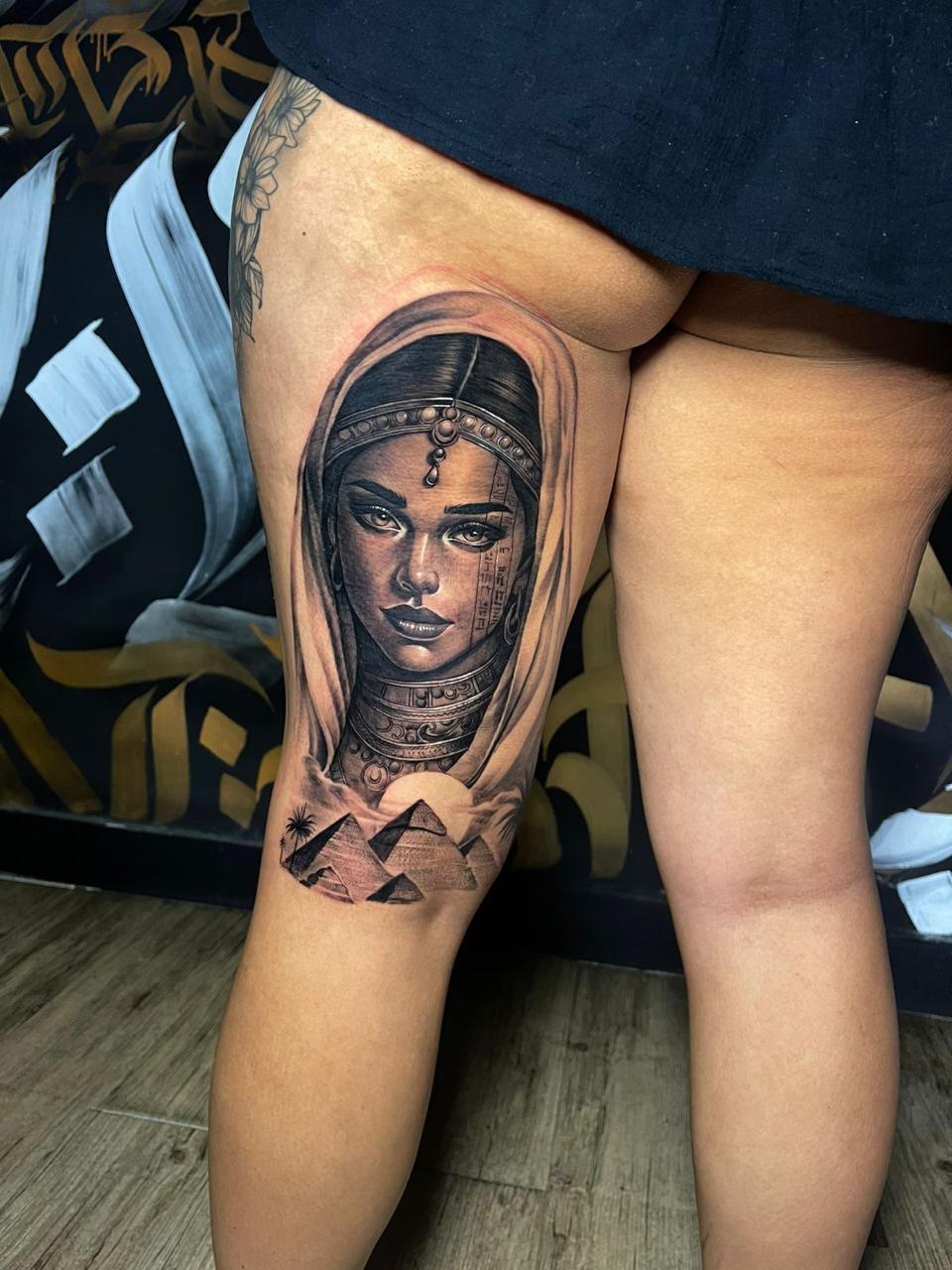
The Session Process for a Portrait
A realistic portrait session is slower than other styles. Your artist will spend:
- 30–60 minutes on stencil prep — adjusting the reference, tracing the key features, and hand-drawing corrections before transferring to skin
- 30–60 minutes on placement — standing back, checking in the mirror, and confirming the likeness before any needle touches skin
- 3–6 hours of tattooing time (depending on size) — building the portrait in layers: outline structure first, then mid-tone shading, then deep shadows and highlights, and finally fine detail work like eyelashes and catchlights in the eyes
- 30–45 minutes on the finish — the artist will step back, compare to the reference, make adjustments, and add those final touches that make a portrait breathe
Healed Expectations
A fresh portrait looks incredible. A healed portrait, after the skin has settled and regenerated, is slightly softer. Here's what's normal:
- Overall saturation drops by about 15–25% as the skin's outer layers renew
- Very fine detail (individual eyelashes, tiny texture lines) softens — this is where size matters most, because larger pieces have more room for that softening before detail is lost
- The contrast between highlights and shadows reduces slightly
- Warm skin tones in colour portraits may shift as the skin's natural undertones mix with the pigment
Your artist will account for all of this during the session, laying down pigment knowing it will heal lighter and slightly softer. That's why it's so important to choose an artist who has a strong portfolio of healed portrait work — not just fresh photos.
A realistic portrait tattoo is a commitment. It costs more, takes longer, and needs better aftercare than most other styles. But when it's right, nothing else carries the same weight — a loved one's face, a beloved pet, or a personal hero permanently rendered with the care and fidelity they deserve.