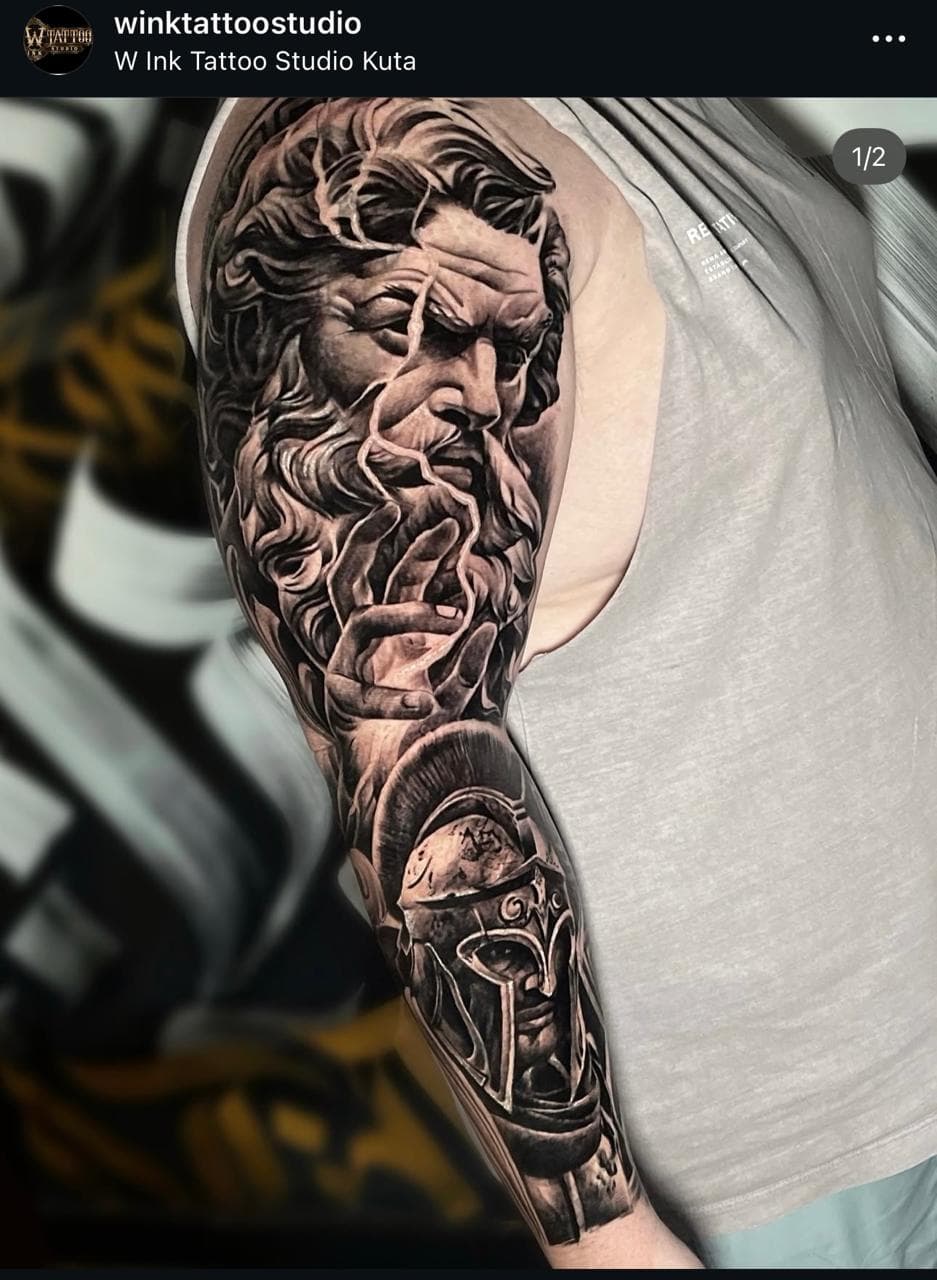
Think of a Sleeve as One Artwork
The best sleeves feel cohesive from every angle. Even when they contain multiple subjects, they still read as one complete composition rather than separate tattoos fighting for space.
That unity is what makes sleeve work so powerful. It wraps with the body, controls movement, and tells a story in a way smaller pieces can't.
Start With Direction
Before any drawing begins, decide what kind of sleeve you want:
- Theme-based — mythology, religion, nature, family, culture
- Style-based — black and grey realism, Japanese, ornamental, tribal
- Mood-based — dark, elegant, aggressive, spiritual, minimal
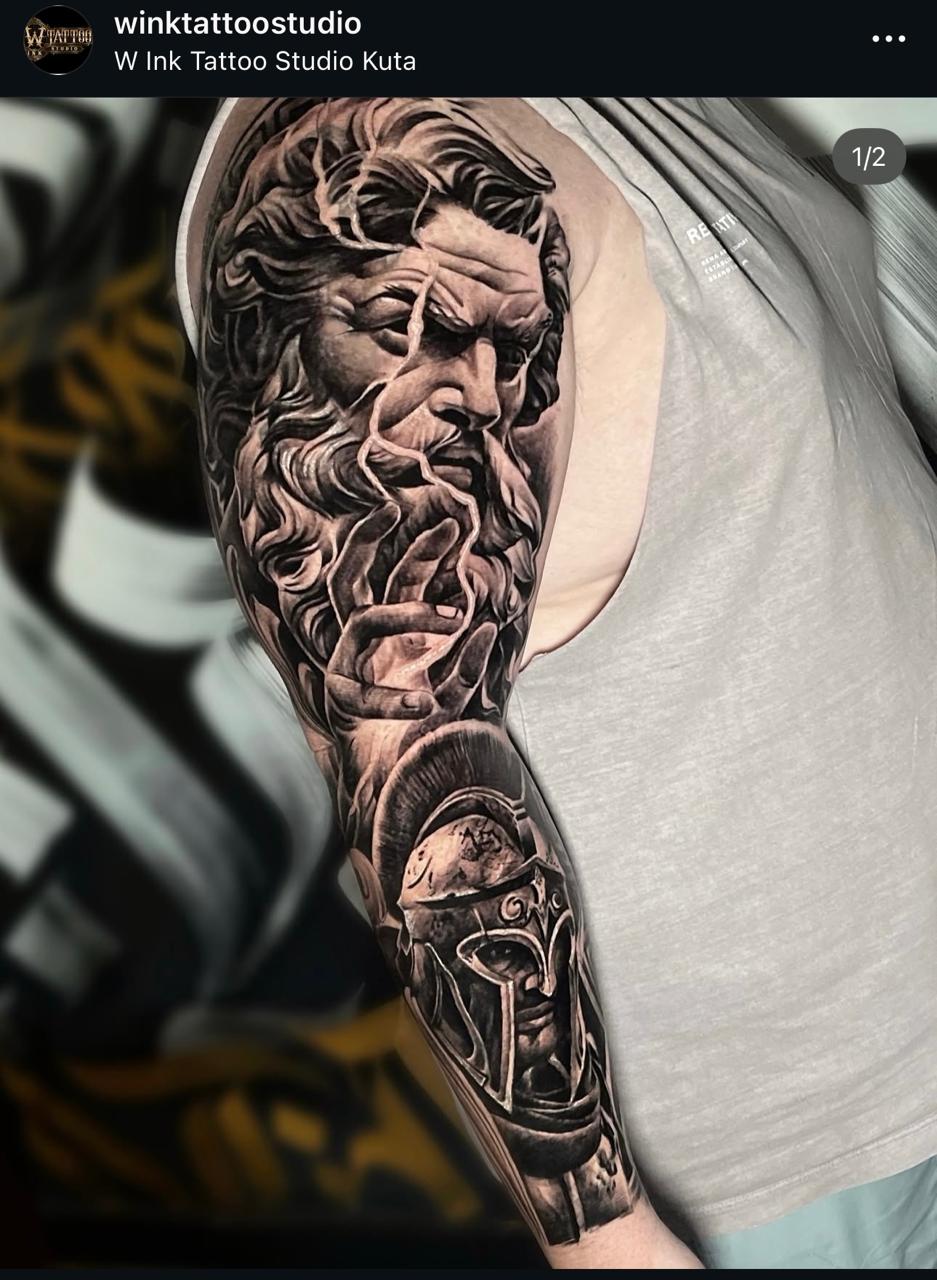
A clear direction helps every later decision, from subject choice to filler, shading, and negative space.
Full Sleeve, Half Sleeve, or Patchwork?
Not every arm project has the same goal.
Full Sleeve
A shoulder-to-wrist composition designed to feel completely connected.
Half Sleeve
A focused project on either the upper or lower arm with room to expand later.
Patchwork Sleeve
A collection of individual tattoos that gradually fills the arm. This can look great too, but it needs thoughtful spacing and style consistency if you want it to feel intentional.
Plan for Flow
Sleeves are successful when they follow the natural shape of the arm. Strong artists think about how the design wraps around the bicep, forearm, elbow, and wrist, not just how it looks flat on paper.
Important considerations include:
- Primary focal points — usually on the outer forearm, upper arm, or inner forearm
- Transitions — background, texture, smoke, filigree, waves, or soft shading that connect major elements
- Breathing room — areas of lower detail that keep the sleeve readable
- Movement — how the composition changes as the arm turns
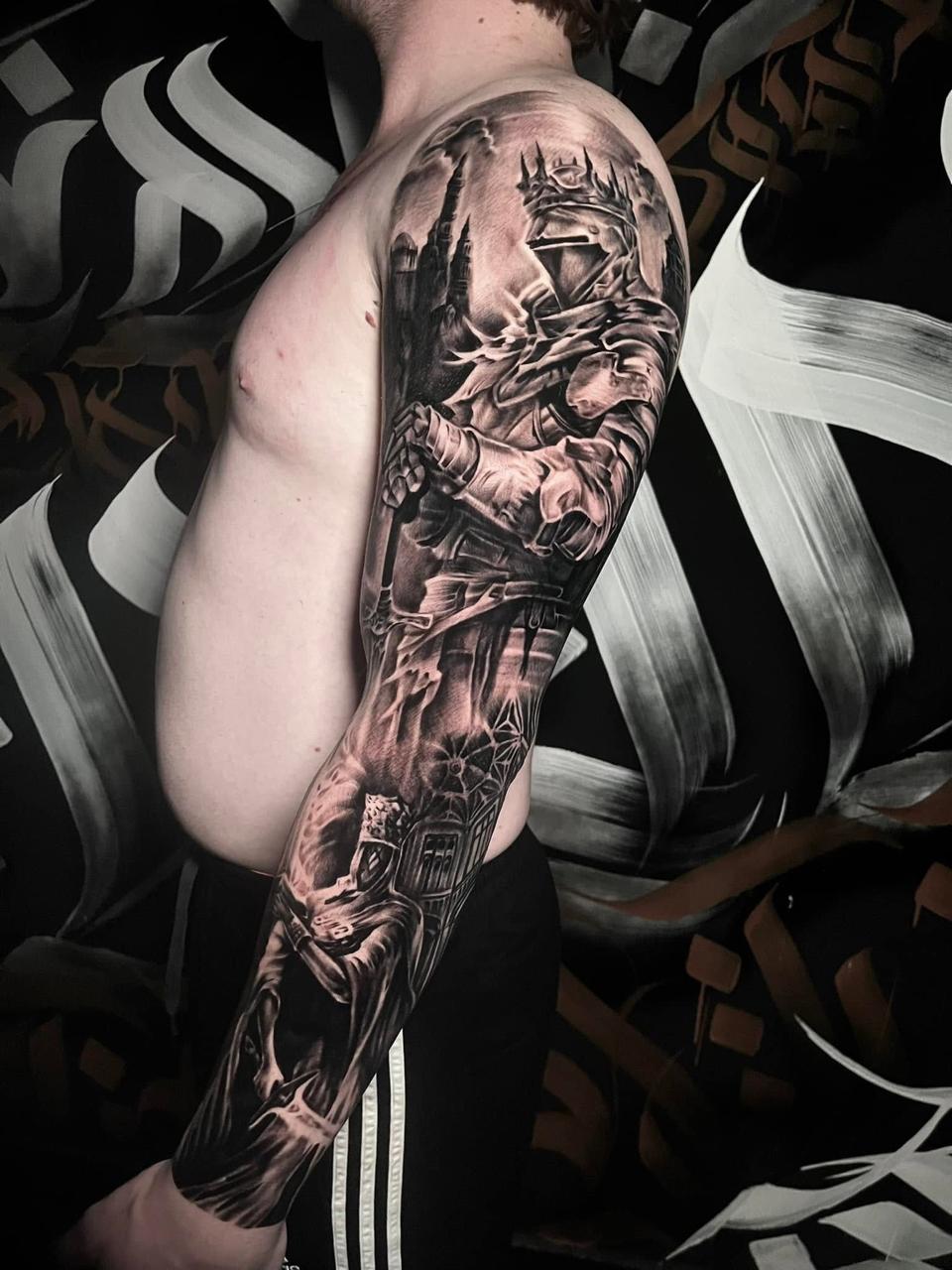
Without flow, even excellent individual tattoos can feel crowded or disconnected.
Be Realistic About Time
Sleeves are rarely one-session tattoos. They often unfold over multiple appointments, especially if they're highly detailed or rendered in realism.
That means planning for:
- Several sessions
- Healing time between appointments
- Consistent visual direction
- Budgeting across the full project
Starting with a complete long-term vision helps avoid awkward add-ons later.
Trust the Design Process
Many clients come in with several reference images and favourite motifs. That's a great starting point, but a strong sleeve needs interpretation, not collage. Your artist should refine the concept so the final piece fits the arm properly and feels custom rather than assembled.
Build It Properly From the Start
At Felicidad Tattoo Studio, we love sleeve projects because they allow for real storytelling and large-scale craftsmanship. If you're thinking about starting one, book a consultation and we'll help map a sleeve that flows with your body and holds together from shoulder to wrist.