Why Ocean Life Works So Well as a Tattoo
Marine subjects sit at a rare intersection in tattoo art: they're visually striking, symbolically rich, and adaptable to almost any style and scale. A jellyfish's translucent, flowing form, a koi's dynamic movement, a turtle's calm geometry — the ocean offers a huge range of shapes and moods to draw from, which is part of why sea life tattoos remain a consistently popular request.
Popular Subjects and Their Symbolism
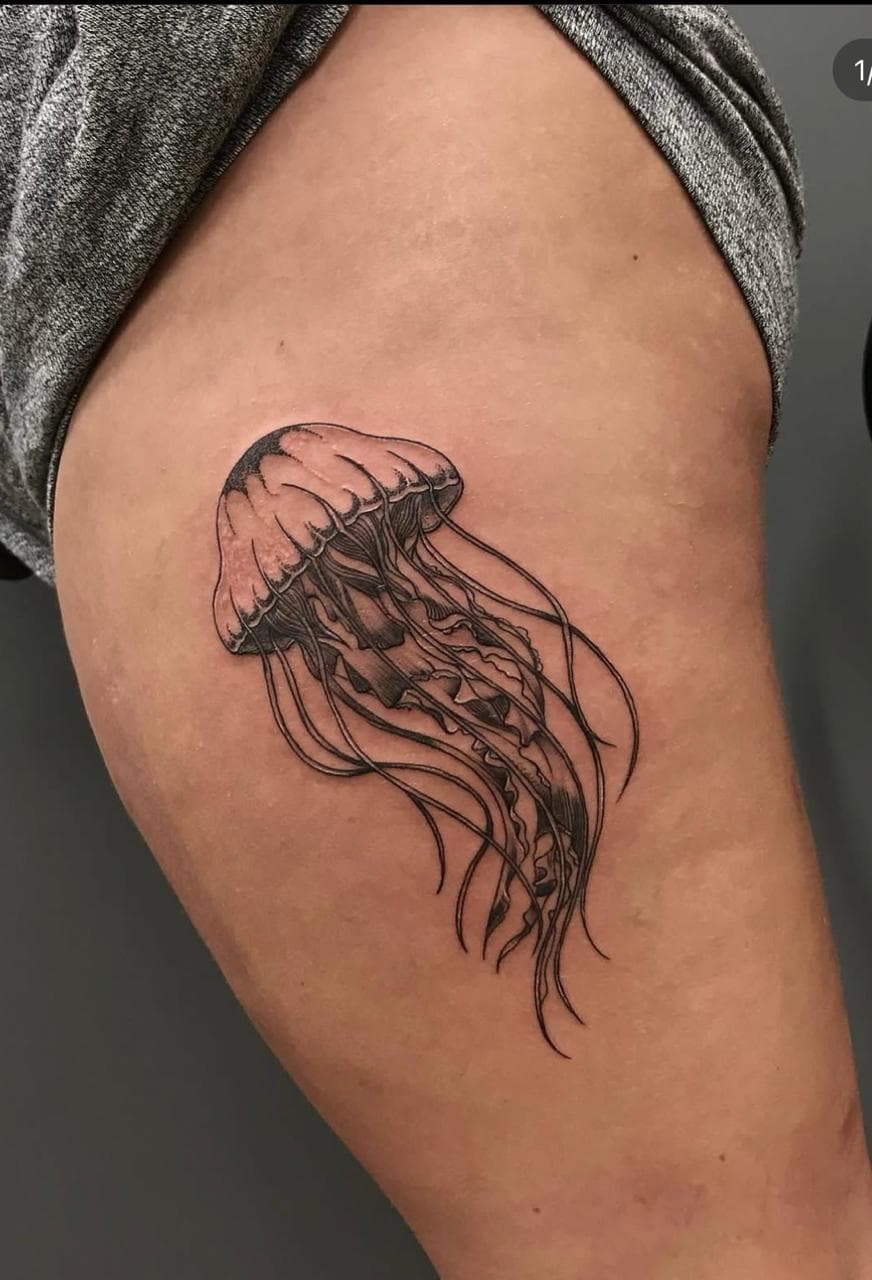
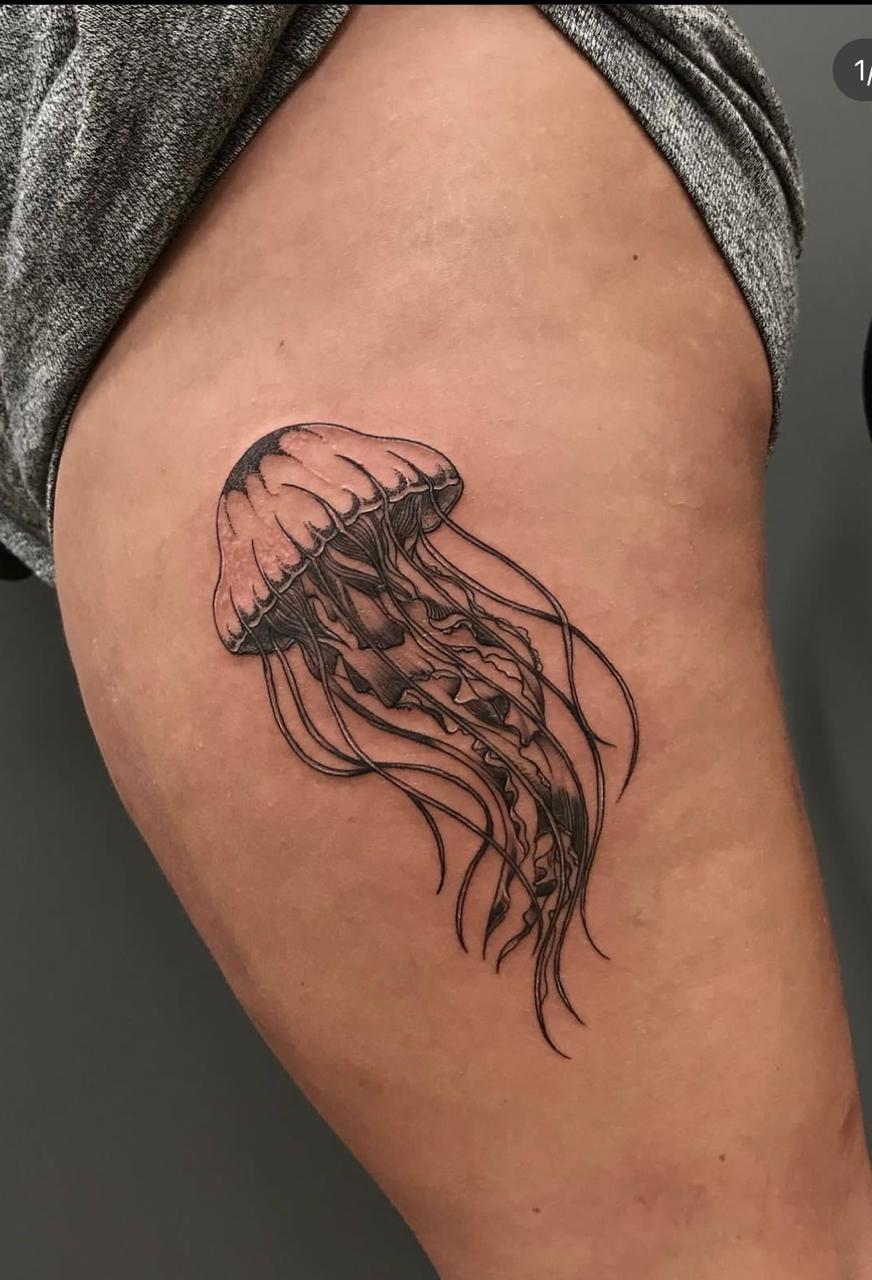
Jellyfish — fluid, otherworldly, and visually striking in motion. Often chosen for their unique translucent quality and association with adaptability and calm.
Koi fish — perseverance, transformation, and good fortune, drawn from East Asian tradition. A koi swimming upstream is a specific and widely recognised symbol of overcoming adversity.
Sea turtles — longevity, navigation, and a grounded, steady presence. Popular for their calm symmetry and ability to anchor a larger composition.
Octopuses — intelligence, adaptability, and mystery, often rendered with dramatic linework that highlights their tentacles and texture.
Whales — scale, depth, and quiet strength — frequently chosen for large-format back or thigh pieces.
Matching Style to Subject
Ocean life tattoos adapt well across several styles, but each brings out something different:
- Black and grey realism captures texture, translucency, and light in a way that suits jellyfish, sharks, and other creatures with complex surface detail.
- Fine line works beautifully for smaller, more delicate marine subjects — a single fish, a wave, a shell — and suits placements like the forearm, spine, or ribs.
- Illustrative and colour work brings vibrancy to koi and coral reef scenes, leaning into the natural saturation of marine environments.
- Japanese-influenced approaches pair naturally with koi and wave motifs, drawing on a long tradition of ocean imagery in that style.
Composing a Larger Ocean Scene
For clients wanting a full sleeve or back piece built around marine life, composition matters as much as subject choice. Waves, coral, and bubbles can be used to link multiple creatures into a single flowing scene rather than a collection of separate images. Discuss with your artist how elements will connect — a good composition should read as one continuous underwater world, not a set of disconnected panels.
Placement Considerations
Flowing subjects like jellyfish and octopuses lend themselves naturally to elongated placements — the spine, the side of the ribs, or a full sleeve — where their tentacles or fluid forms can move with the body's natural lines. More compact subjects like a single koi or turtle work well on the forearm, calf, or upper arm.
Getting the Detail Right
Marine life often includes fine textural detail — the translucency of a jellyfish, the scale pattern of a koi, the texture of coral — that benefits from a larger scale to render properly. If you're drawn to a highly detailed piece, be open to sizing it generously; too small, and that texture can blur over time.
At Felicidad Tattoo Studio in Darwin, we work across realism, illustrative, and fine line styles — all well suited to ocean and marine subjects. Book a consultation and let's design something that captures the world beneath the surface.