From Traditional Roots to Modern Bloom
Neo-traditional tattooing is the evolutionary cousin of American traditional — the style that gave us the iconic rose, the anchor, the dagger, and the swallow. Where traditional work stays tight and flat with a restricted palette, neo-traditional opens the doors to richer shading, more natural anatomy, and a broader spectrum of hues while keeping the bold outlines that make its ancestor so instantly recognisable.
It's the style for people who love the punch and readability of old-school ink, but want subjects and treatments that feel a little more alive.
Defining Visual Characteristics
Every style has its rules. Here's what makes a tattoo definitively neo-traditional:
- Bold, consistent outlines — just like traditional, the linework is the backbone of the piece. No fuzzy edges, no feathered transitions into the skin.
- Smooth, blended shading — black and grey washes or colour gradients create volume without losing the graphic punch.
- Rich, saturated colour — think deep crimson, royal purple, emerald green, and warm gold rather than the flat primary palette of traditional work.
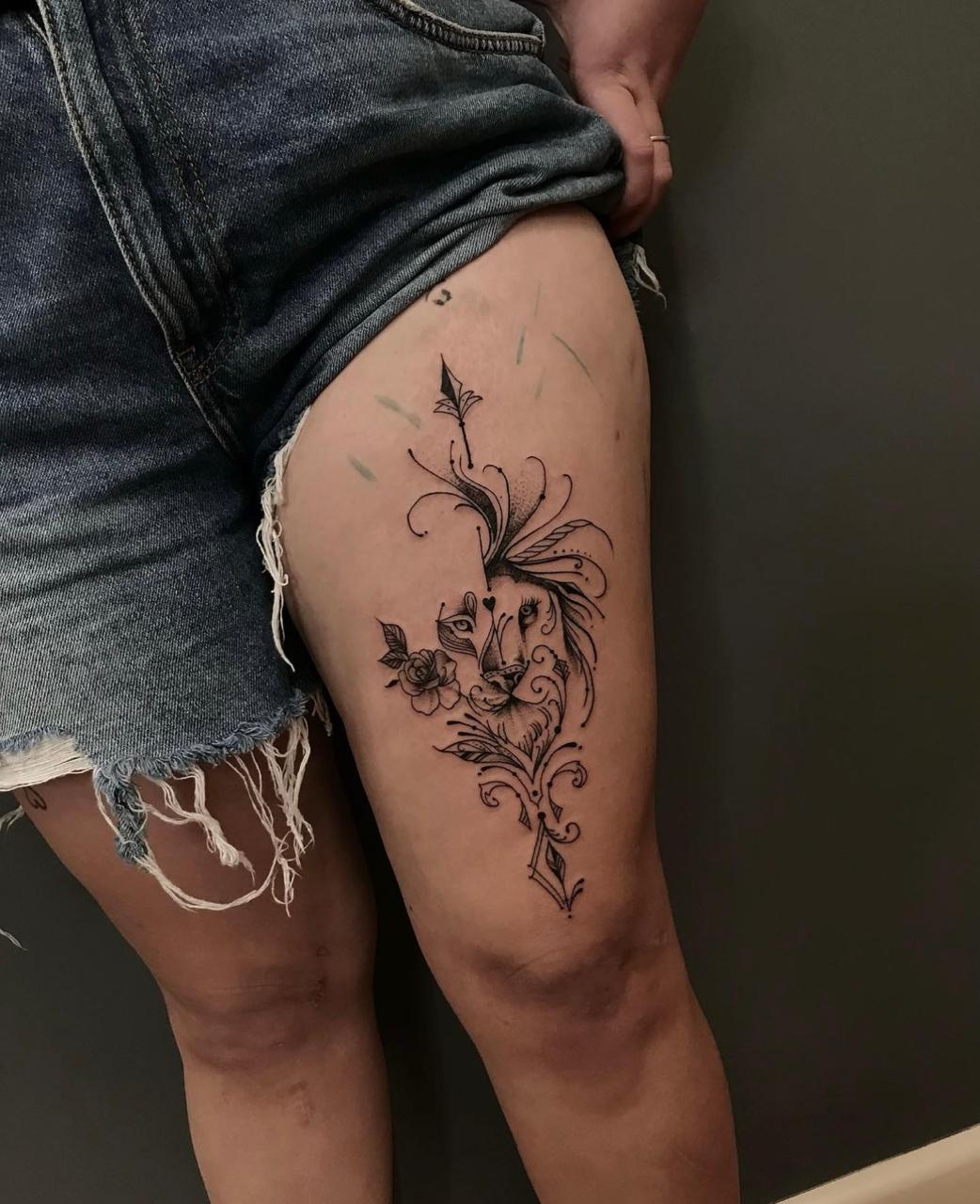
- Naturalistic detail — fur, feathers, petals, and fabric folds are rendered with more realism than in traditional pieces, while still staying decorative.
- Decorative ornamentation — filigree, scrollwork, lace, and geometric borders are common supporting elements.
Popular Subjects in Neo-Traditional Work
The subject range is wider than in traditional, but certain motifs reappear constantly because they suit the style so well:
Animals and Wildlife
Big cats, wolves, foxes, deer, and birds of prey are natural fits. The bold outline keeps the shape readable at a distance, while the blended shading lets the artist capture the texture of fur or feathers. Floral crowns, decorative collars, and illustrative surrounds give the artist room to play.
Botanical and Floral
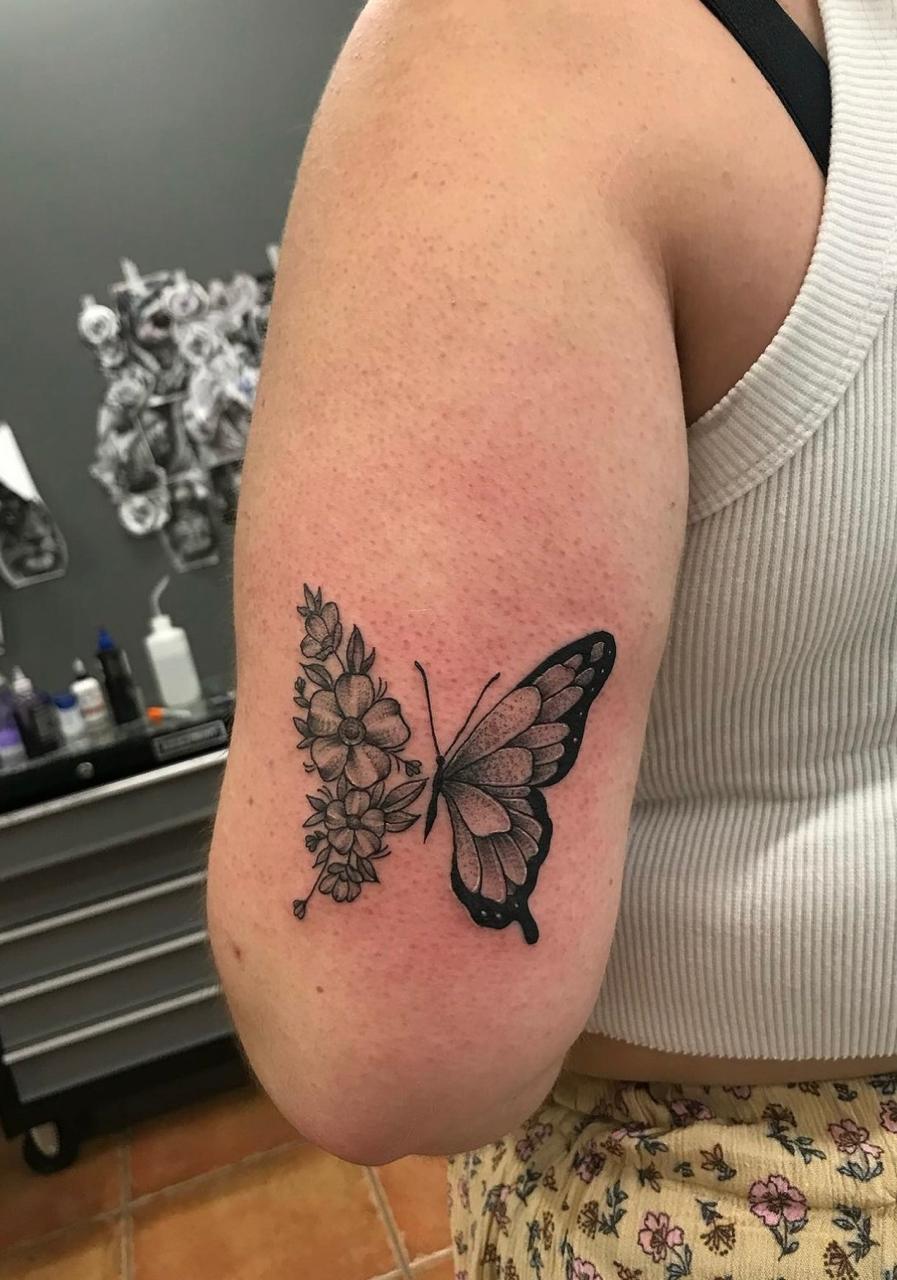
Roses, peonies, lilies, and sunflowers rendered with full petal dimension and dramatic highlights. Neo-traditional florals are a go-to for sleeve backgrounds, standalone statement pieces, and memorial work.
Mythology and Folklore
Greek gods, Norse runestone scenes, Japanese kitsune, and Balinese spirit figures all translate beautifully into neo-traditional. The decorative treatment gives the stories the weight they deserve.
Portraiture (Stylised)
Not hyper-realism — neo-traditional portraits lean into personality rather than photographic accuracy. Bold features, expressive eyes, and decorative accessories make them feel like characters from a storybook.
How to Approach a Neo-Traditional Piece
If you're considering a neo-traditional tattoo, here's how to get the best result:
Size matters
Neo-traditional work needs room for the shading and detail to breathe. A complex neo-traditional design crammed into a 5cm space will lose definition quickly as the skin ages. Most pieces work best at palm size or larger.
Placement advice
- Upper arm, thigh, or calf — large, relatively flat areas that show off the outline and shading clearly
- Back or chest — ideal for multi-element scenes or large-scale animals with decorative surrounds
- Forearm — works beautifully for vertical designs like stacked florals or running animals
- Avoid very curved areas (ribs, inner arm) for your first neo-traditional piece — the distortion can flatten the effect
Working with your artist
Bring reference images that show the energy you want, not just the subject. Tell your artist if you lean towards:
- Darker, more moody palettes vs bright and jewel-toned
- Heavy ornamentation vs minimal decoration
- A more illustrative feel vs something closer to straight traditional
A skilled neo-traditional artist will take your subject and treat it in a way that suits your skin, your placement, and the overall feel of your collection.
Why It Ages So Well
The bold outline is the secret to neo-traditional's longevity. Where fine line work can soften considerably over ten years, the thick, consistent lines of a neo-traditional piece hold their shape. The saturated, heavily packed colour stays vivid longer than delicate watercolour-style treatments, and the shading covers more surface area, making the inevitable fading less noticeable.
If you're building a long-term collection and want pieces that will still pop in fifteen years, neo-traditional is one of the safest style bets you can make.