Why the Moth?
Few creatures carry as much symbolic weight as the moth. Unlike its daytime counterpart the butterfly — often associated with transformation, beauty, and renewal — the moth operates in shadow. It is drawn to light it cannot fully reach, navigating by the moon, navigating by instinct. That tension between longing and limitation, between light and darkness, is part of what makes the moth such a compelling tattoo subject.
People choose moth tattoos for a wide range of reasons: as a symbol of resilience, of following inner guidance, of embracing what exists in the margins. For many, the moth represents the parts of themselves that don't fit neatly into more conventional symbolism.
Common Symbolic Associations
The moth carries different meanings across different traditions:
- Transformation and change — like the butterfly, the moth undergoes metamorphosis, emerging from a seemingly static state into something entirely new
- Attraction to the intangible — the moth's drive toward flame or light is often read as a metaphor for pursuing something beyond reach, for faith, for obsession
- Death and the afterlife — in some cultures, moths are associated with the souls of the deceased or with communication between the living and the dead
- Vulnerability and strength — the fragile wings of a moth belie a creature that navigates darkness with precision
None of these meanings is fixed. What a moth symbolises in your tattoo is what you bring to it.
Design Approaches
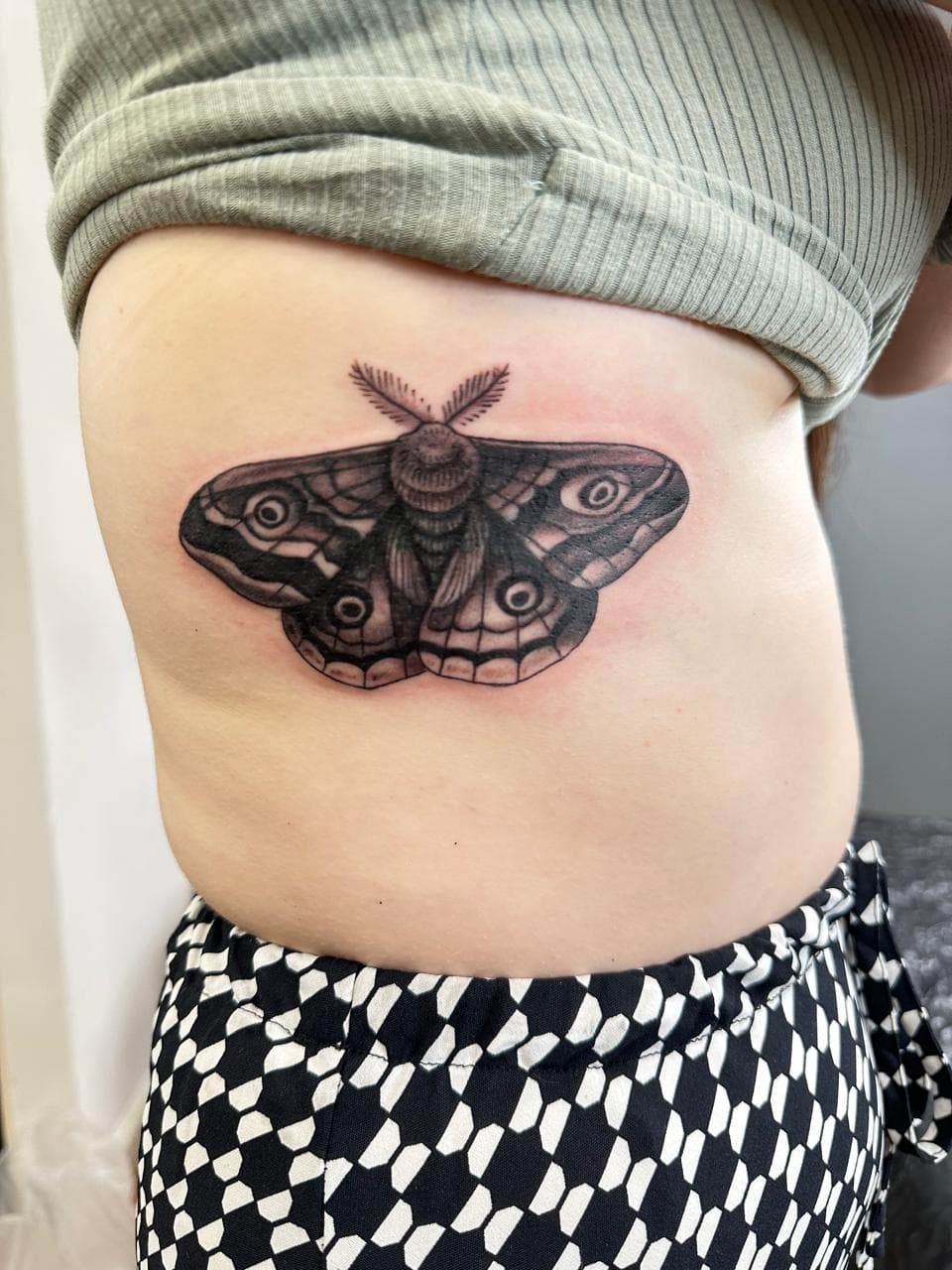
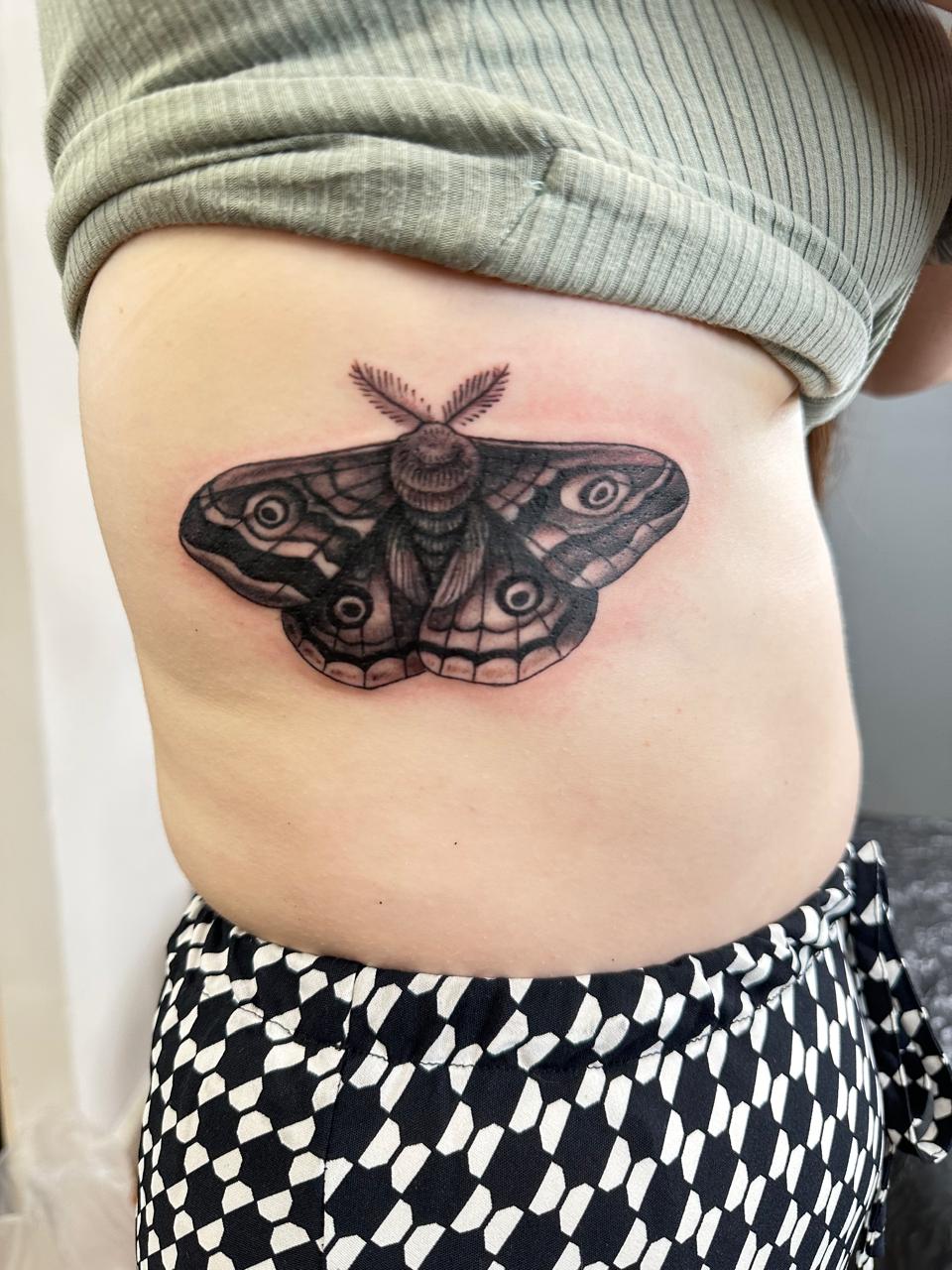
Realistic or illustrative rendering allows for extraordinary detail in moth wing patterns — the gradients, the eyespots, the delicate venation. In black and grey, these textures translate beautifully, giving a moth tattoo a natural, almost scientific quality.
Graphic or bold approaches strip the moth back to its essential silhouette, making it strong and iconic rather than delicate. This works especially well for smaller pieces or as part of a larger geometric composition.
Combining with other elements is also common. Moths pair naturally with:
- Moons and celestial imagery
- Flowers, particularly dark or unusual botanicals like black roses or nightshade
- Skulls or skull-shaped patterns within the wings
- Candles, flames, or lanterns
- Script or fine line lettering
The moth's bilateral symmetry makes it a naturally strong standalone tattoo subject — a spread-wing moth sits cleanly on many placements.
Placement
Because moths are naturally symmetrical, they work well on placements that benefit from a centred design:
- Chest — a spread-wing moth placed centrally creates a powerful, balanced composition
- Upper back or spine — vertical placements work with the moth's natural vertical symmetry
- Ribcage — the curvature of the ribs works naturally with a detailed moth wing design
- Sternum — popular for fine line and ornamental moth pieces
Larger moths can also work on thighs or as part of a sleeve or larger composition.
A Note on Colour
Moth tattoos work exceptionally well in black and grey — the natural palette of many moth species is already monochromatic, and greyscale rendering captures wing texture with great fidelity. However, colour moths — particularly those inspired by species like the luna moth or the atlas moth — offer rich green, blue, and amber tones that can make for striking work.
Talk to your artist about which approach aligns with the overall feel you want to achieve.
At Felicidad Tattoo Studio in Darwin, we love working with detailed natural history subjects like moths. Book a consultation to start designing your piece.