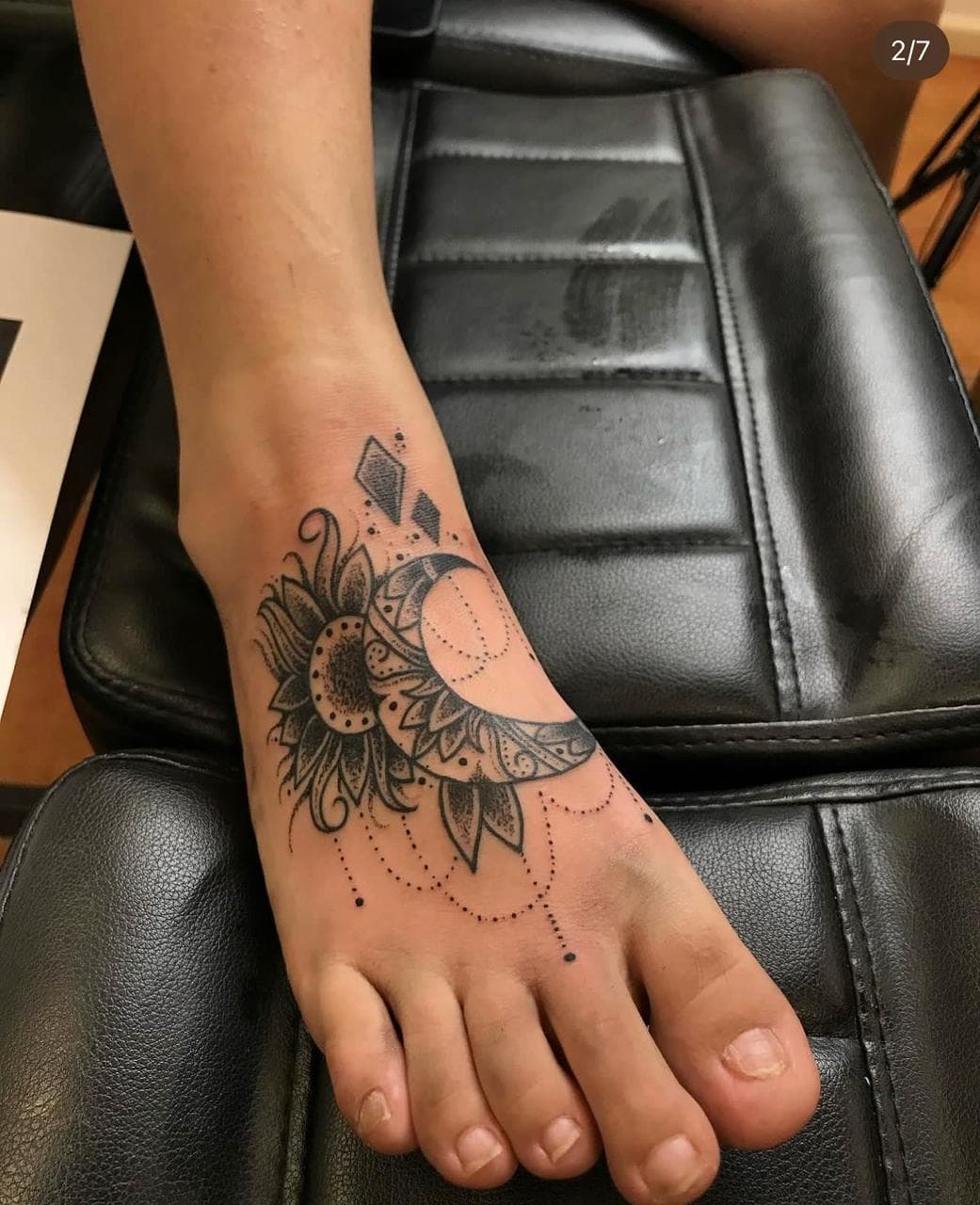
Sacred Geometry on Skin
Mandala and ornamental tattooing sit at the intersection of geometric precision and decorative artistry. Both styles share a foundation in symmetry and structured pattern, but they diverge in their origins and compositional logic.
Understanding the distinction — and knowing what each looks like at its best — will help you arrive at a consultation with a clear idea of what you're after.
What Is a Mandala Tattoo?
The word mandala comes from Sanskrit, meaning "circle." In Hindu and Buddhist traditions, mandalas are geometric diagrams representing the universe — used as spiritual tools for meditation, ritual, and visualisation.
Tattoo mandalas draw from this visual vocabulary: radiating outward from a central point in concentric rings of interlocking geometric shapes, florals, and fine details. They are fundamentally about symmetry and balance — what appears on one side mirrors what appears on the other.
Key characteristics:
- Radial symmetry — every element repeats around a central axis
- Fine linework — the detail in a mandala relies on precision at small scale
- Geometric and floral elements — petals, triangles, diamonds, and dot patterns build the composition layer by layer
- Negative space — as important as the filled areas; good mandala work uses both thoughtfully
Mandalas work beautifully on large, flat surfaces: the upper back, the chest, the thigh, the upper arm. They can also work as smaller pieces on the forearm, shoulder, or calf.
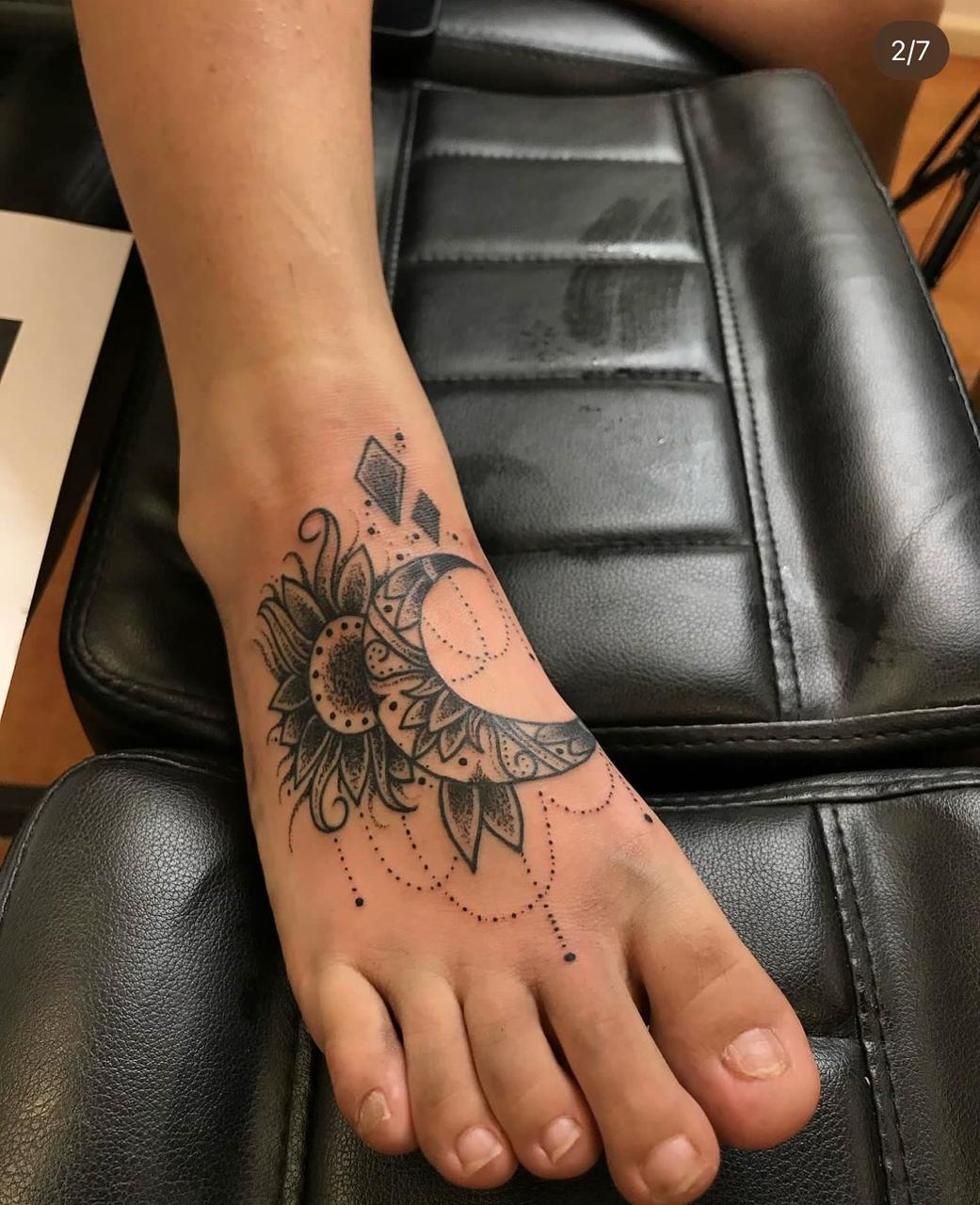
What Is Ornamental Tattooing?
Ornamental tattooing is a broader category. Where mandalas are defined by circular, radially symmetric structure, ornamental work encompasses any tattoo built on decorative patterning and embellishment — drawing from jewellery, filigree, architecture, and sacred geometric traditions.
An ornamental tattoo might:
- Follow the contour of a spine with a chain of flowing geometric shapes
- Frame a figurative subject with decorative borders and dot work
- Create a jewellery-like composition on the collarbone or hand
- Combine geometric forms with botanical elements for a structured but organic feel
The ornamental style is highly adaptable — it scales from a delicate ring-like design on the finger to a full back piece. Its vocabulary includes dotwork, filigree, lacework, and geometric modules that tile or flow across the body.
Black Ink and Dotwork
Both mandala and ornamental tattoos are almost exclusively done in black ink — occasionally with grey shading, but rarely with colour. The style depends on the contrast between fine black linework and clean skin, with dotwork (stippling) often used to add texture and gradient.
Colour can be incorporated, but it changes the character significantly. If you're drawn to the precision and elegance of these styles, black ink will almost always give you the strongest result.
Placement Considerations
Because mandala and ornamental work relies on geometric symmetry, placement matters more than in many other styles.
Best placements:
- Sternum and chest — the body's natural symmetry complements the radial structure of a mandala
- Upper back and spine — a vertical ornamental piece can follow the spine beautifully
- Thigh — a large, flat surface that shows geometric detail well
- Shoulder or upper arm — wraps naturally without distortion
- Hand and fingers — smaller ornamental pieces work well here, though be aware these areas fade faster
Avoid placing large geometric pieces on areas with significant contour variation — the symmetry can appear distorted on highly curved surfaces.
How to Prepare for Your Design
When you come in for a consultation, bring:
- Reference images of mandalas or ornamental work you're drawn to — be specific about what appeals to you (the density, the scale, the style of the linework)
- A clear idea of your intended placement
- Thoughts on whether you want strict symmetry or something more flowing
- Any personal symbols you'd like incorporated — mandalas can be personalised with elements that carry meaning for you
At Felicidad Tattoo Studio, ornamental and mandala work is one of our specialties. The precision these styles demand is where skilled artists shine — and the results are consistently among our most striking work.