The Enduring Appeal of the Knight
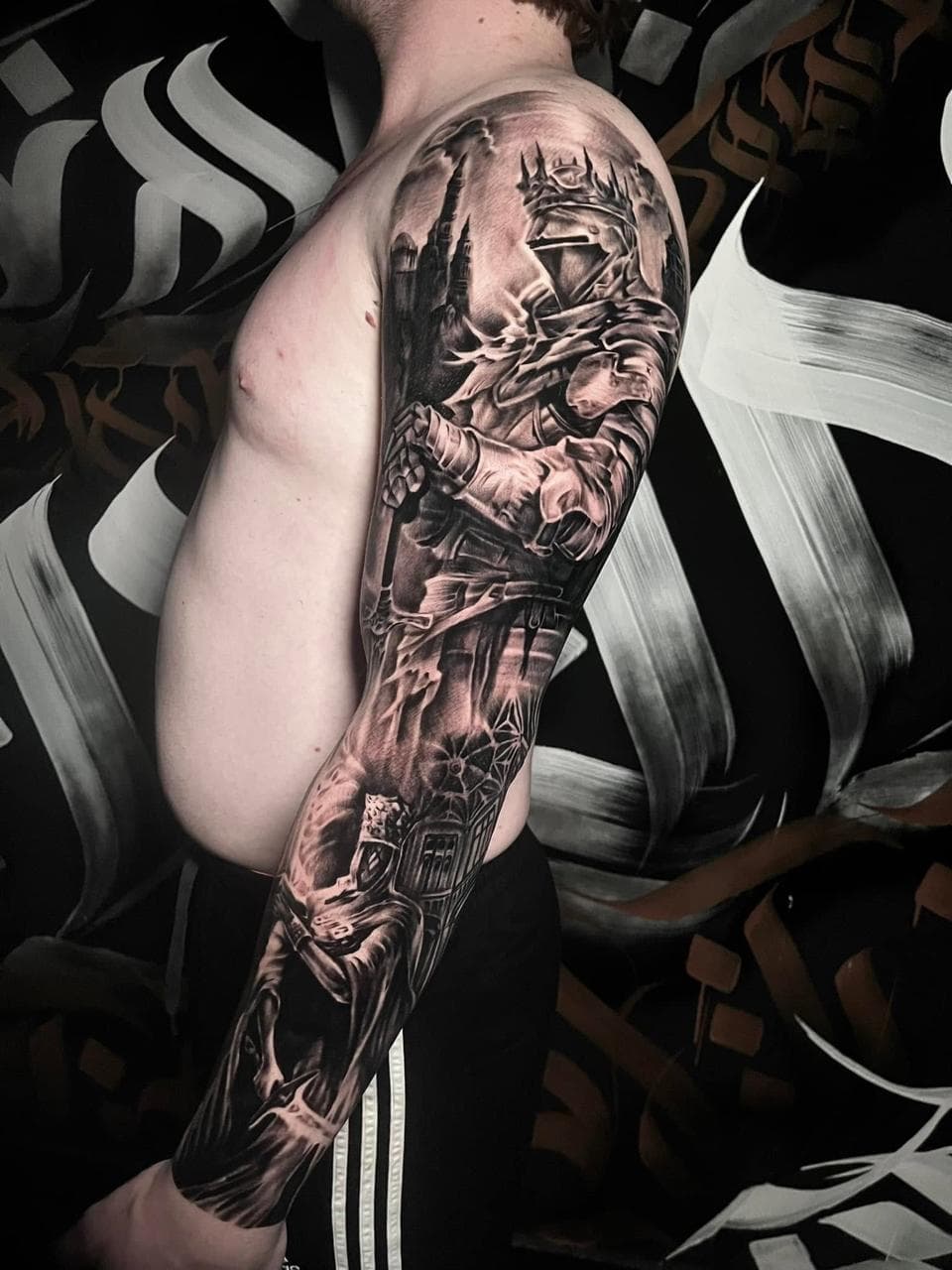
The image of the armoured knight occupies a unique place in Western visual culture. It speaks to ideals of honour, discipline, protection, and sacrifice — but also to darkness, crusade, and the complex history of medieval warfare. In tattooing, the knight is one of the most versatile and technically demanding subjects: all that worked metal, layered armour, and dramatic drapery gives a skilled realist tattoo artist an extraordinary amount to work with.
For the person wearing it, a knight tattoo might represent personal values — strength, loyalty, perseverance — or a connection to history, mythology, or the fantasy genre. The imagery is flexible enough to carry many different meanings.
Styles That Suit Medieval Imagery
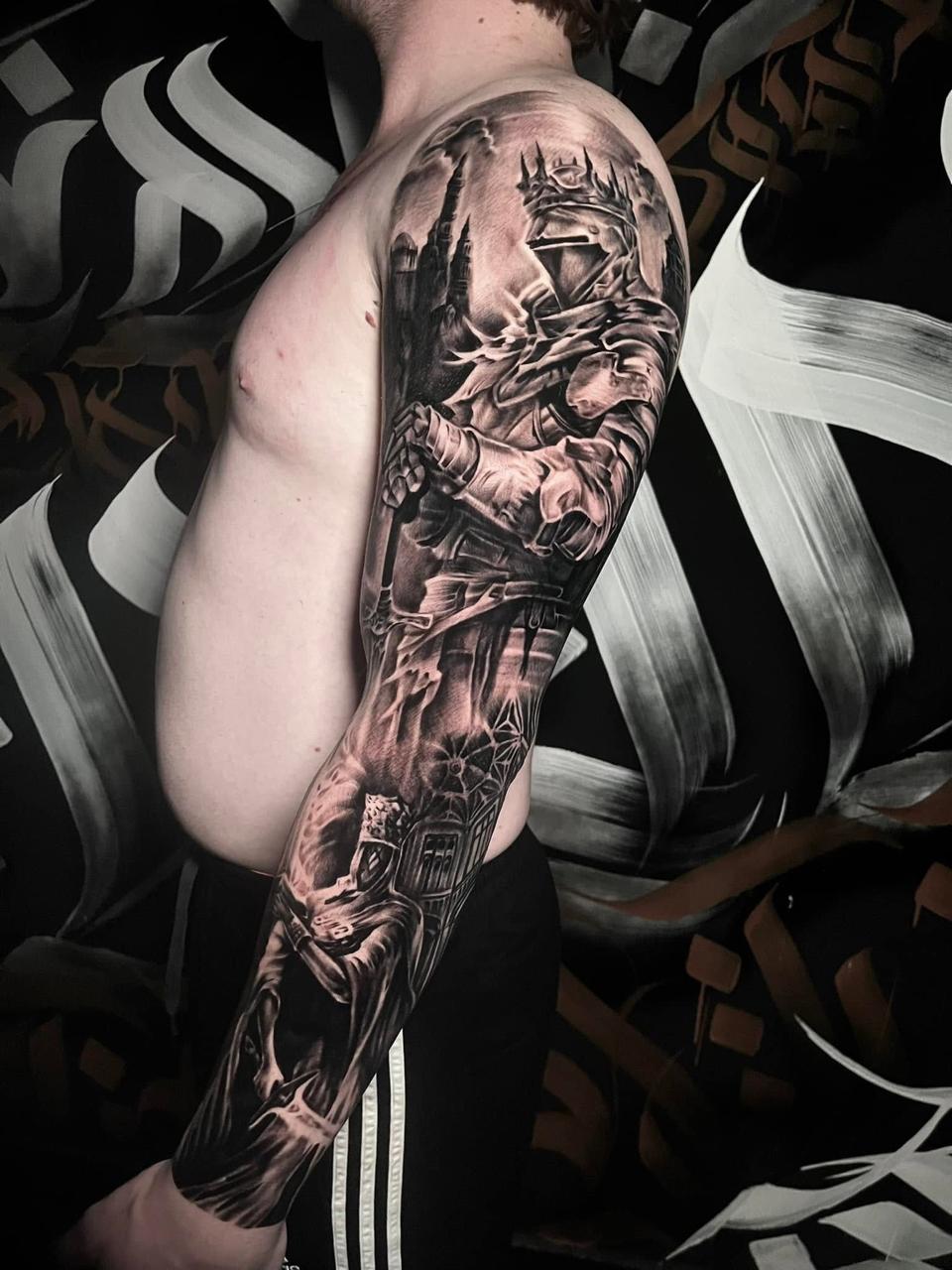
Black and grey realism is the most common approach for knight and armour tattoos, and for good reason. The high contrast and tonal range of greyscale work is ideal for rendering metal textures — the reflective surface of polished plate armour, the weight of chainmail, the texture of leather and fabric. Rendered well, an armoured figure can look almost sculptural.
Dark illustrative rendering takes the medieval subject into more graphic territory, borrowing from illuminated manuscripts, woodblock prints, or fantasy concept art. This approach tends to be more stylised and can work at slightly smaller scales than strict realism.
Neo-traditional treatment gives knights and warriors a bold, iconic quality — strong outlines, rich fills, and a composition that reads clearly from a distance.
Common Subject Matter
Medieval and armour-themed tattoos draw from a wide range of sources:
- Historical armour — plate armour from different periods and regions, each with distinct visual characteristics
- Heraldry — shields, crests, and coats of arms carry both visual interest and personal significance
- Swords and weapons — the sword alone is one of the most symbolically loaded objects in Western iconography
- Religious iconography — crusader crosses, the imagery of the Templar and Hospitaller orders
- Fictional knights — figures from Arthurian legend, Game of Thrones, Dark Souls, and other fantasy sources
These categories often combine: a historical knight might carry a heraldic shield, surrounded by roses and a Latin motto.
Scale and Placement
Armour and knight compositions tend to reward larger scales. The detail in worked metal — the rivets, the etching, the layer upon layer of interlocking plate — only comes through fully when the piece has enough room to breathe.
Full sleeves are the natural home for elaborate knight compositions, allowing the imagery to wrap around the arm with multiple elements filling the space. Thigh pieces, calf sleeves, and chest panels are also common placements.
Simpler elements — a lone sword, a heraldic crest, a profile helmet — can work at smaller scales on forearms, shoulders, or as standalone pieces.
Bringing Personal Meaning to the Imagery
The best knight and warrior tattoos go beyond pure aesthetic. Consider what specifically draws you to this imagery:
- Is it a specific tradition — Arthurian, historical, or fictional?
- Is it a set of values the imagery represents for you?
- Is there family heritage or cultural history that connects you to European medieval traditions?
- Is there a specific piece of art, literature, or film that has shaped your visual reference?
These answers will help your artist develop a design that is genuinely yours rather than a generic rendering of familiar imagery.
At Felicidad Tattoo Studio in Darwin, we specialise in detailed realism work that can bring complex armour and warrior imagery to life. Book a consultation to discuss your concept.