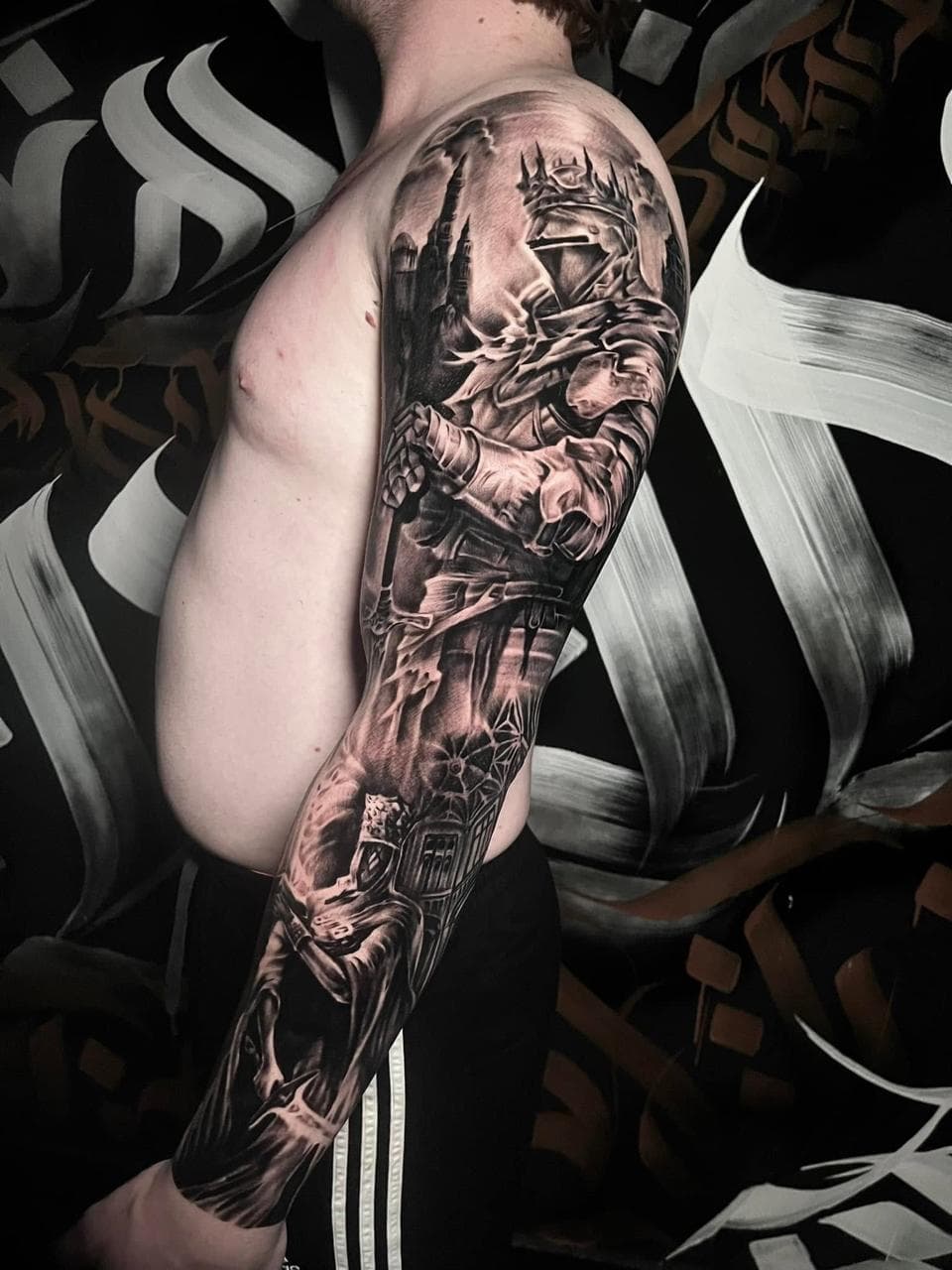
The Slow Sleeve: A Collection, Not Just a Project
There's a common idea that a tattoo sleeve has to be designed as a single piece and completed in a handful of marathon sessions. And while that's absolutely one approach — and one that works beautifully for many people — it's not the only way.
Some of the most interesting sleeves we've worked on at Felicidad have been built gradually. One piece at a time, over months or even years, with each tattoo marking a moment, an interest, or a chapter. The result is less a single artwork and more a visual journal — a collection of pieces that relate, contrast, and flow together in a way that feels authentic and lived-in.
If you're drawn to this approach, here's how to build a sleeve that grows with you without ever feeling disjointed or unfinished.
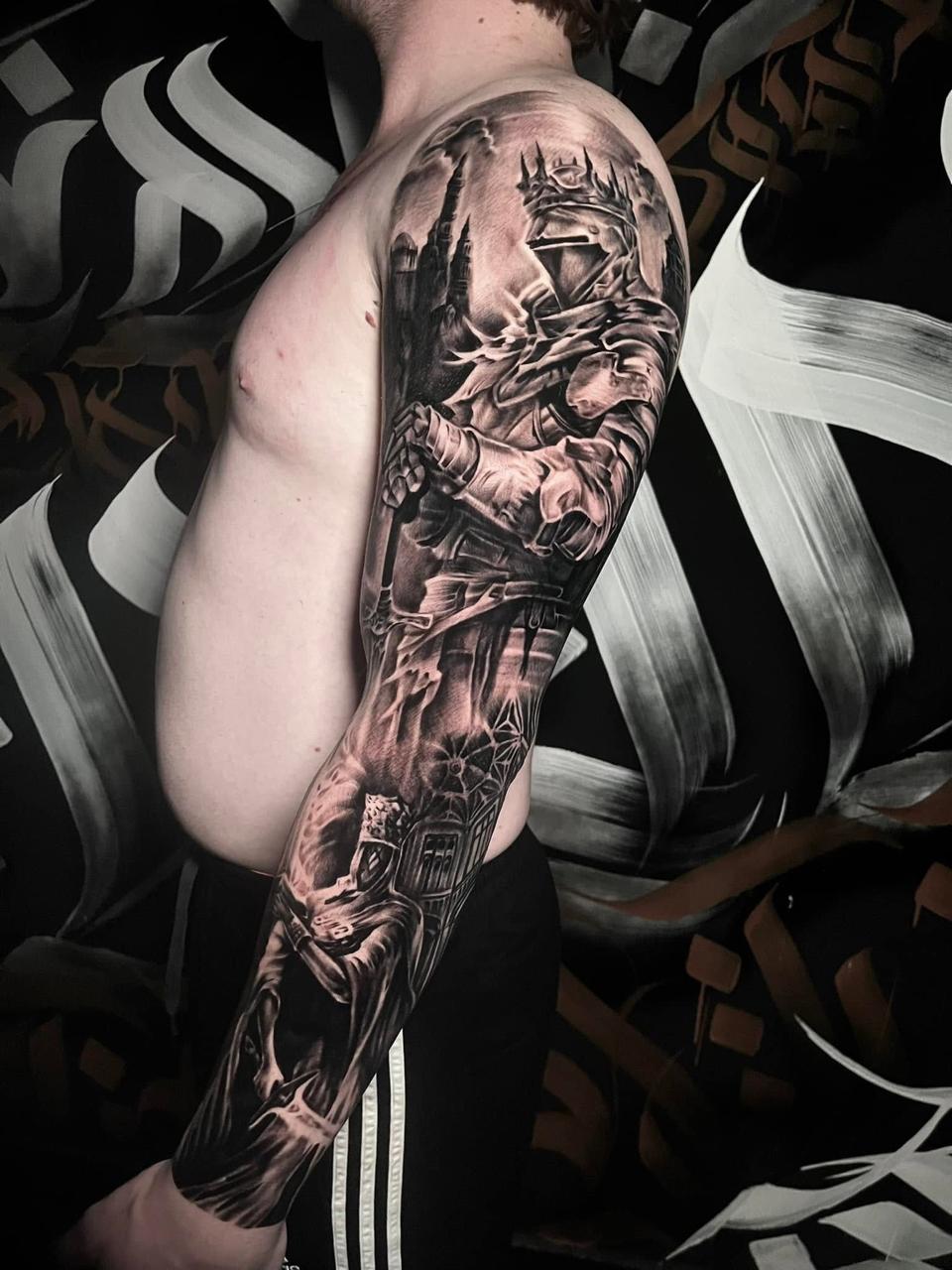
Start With the Direction, Not the Details
You don't need a fully mapped-out blueprint on day one, but you do need a sense of direction. Ask yourself:
- What style feels like home? Realism, illustrative, Japanese, ornamental, neo-traditional, or a blend? Staying within a family of styles gives your sleeve natural cohesion.
- What palette am I drawn to? Black and grey only, full colour, or somewhere in between? Committing to a palette early prevents future pieces from clashing.
- What themes matter to me? Mythology, nature, pop culture, family, travel, spirituality? Working within loose themes gives each piece context and helps them feel connected even when they're visually distinct.
Write these down — a couple of bullet points is enough. They'll be your compass when you're deciding what to add next.
Pick Your Anchor Piece First
Every great collection needs a foundation. The anchor piece is usually the largest or most central tattoo in your sleeve — something that sets the tone and gives you something to build around.
Good anchor pieces tend to be:
- A detailed portrait or character study
- A mythological or cultural scene
- A large botanical or animal subject
- A complex mandala or ornamental composition
Placed on the upper arm, inner bicep, or forearm, an anchor piece naturally creates zones for future work: above it, below it, wrapping around it, and filling the gaps between it and other pieces.
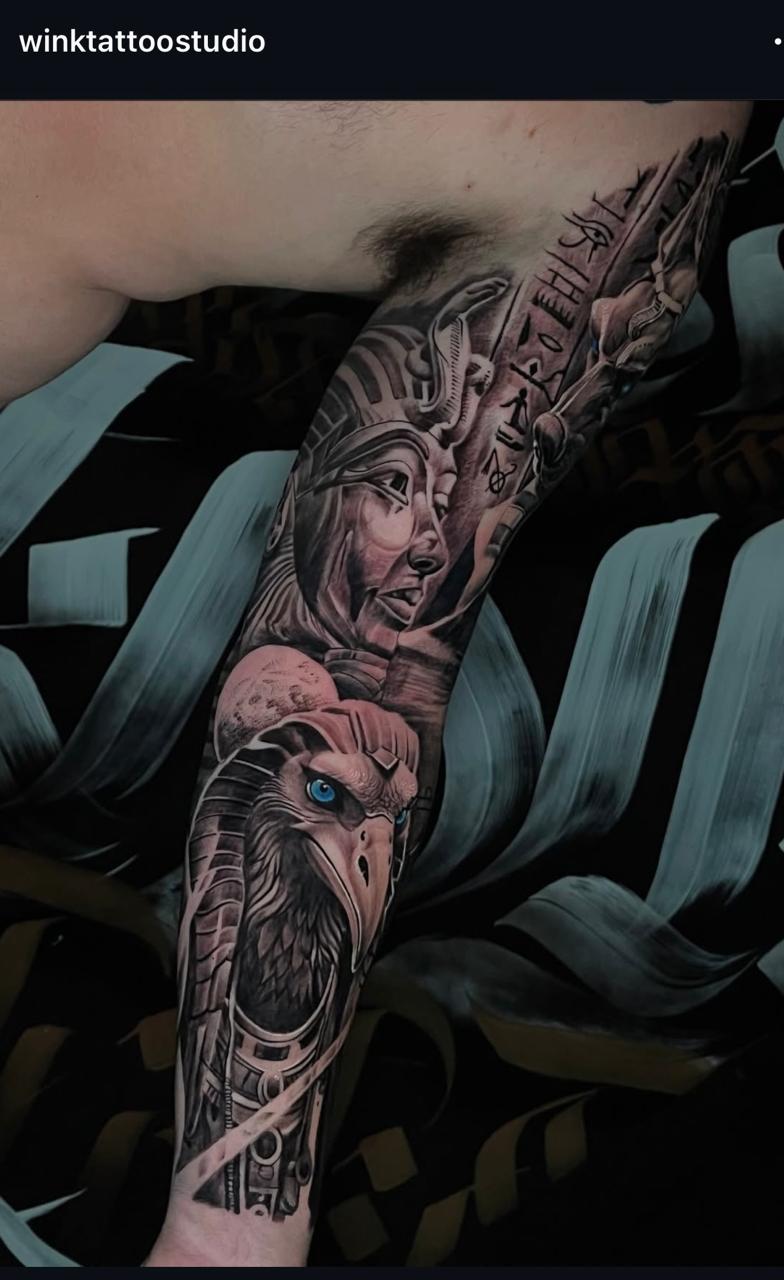
Plan the Flow Before You Fill the Space
Even if you're building slowly, it's worth having a conversation with your artist early on about composition and flow. A good artist will help you think about:
- Movement — Do pieces wrap around the arm or sit flat? Japanese sleeves, for example, are designed to flow continuously as the arm moves.
- Weight and balance — Larger, darker pieces should be distributed so one area doesn't feel visually heavy while another feels empty.
- Negative space — Empty skin is not a blank space waiting to be filled. It's a design element that gives your pieces room to breathe.
- Background elements — Will you eventually want water, smoke, clouds, patterns, or filigree to tie everything together? Planning for these early means future pieces can slot in naturally.
You don't have to commit to a background yet. Just make sure your artist knows whether you're open to one down the line — it'll change how they place your current piece.
Working With Themes and Motifs
Themes are the invisible glue that hold a slow-built sleeve together. A clear theme lets you add new pieces that feel connected without being visually identical.
Some theme approaches we've seen work beautifully:
Mythological Pantheon
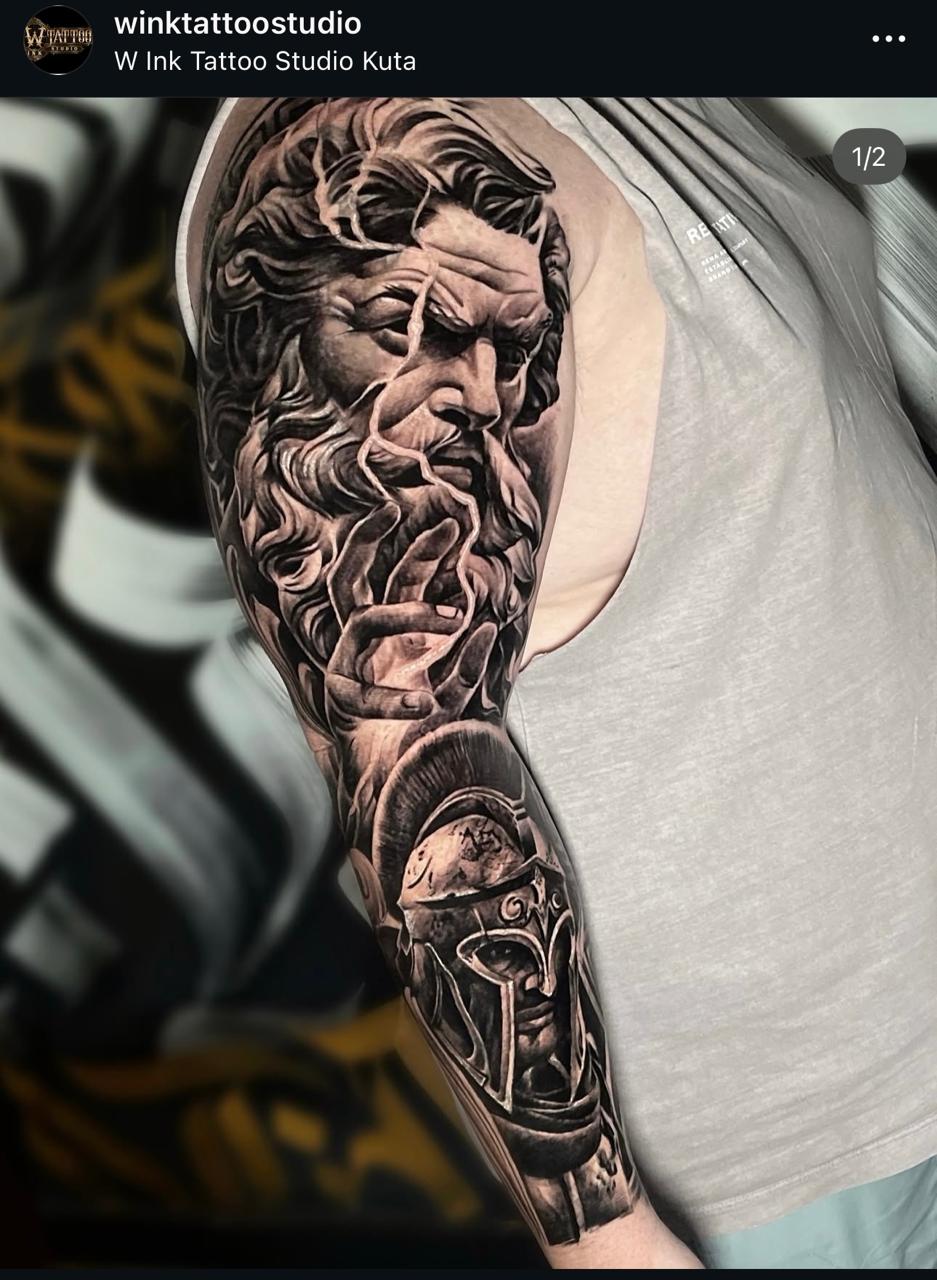
One anchor god or hero, with supporting deities, symbols, and scenes added over time. A Spartan anchor paired with Greek columns, Zeus portraits, and Spartan helmet accents creates a naturally cohesive narrative.
Nature and Elemental
Build an ecosystem. A wolf anchor piece with forests, mountains, birds, and weather elements added as separate compositions that share a palette and mood.
Cultural Heritage
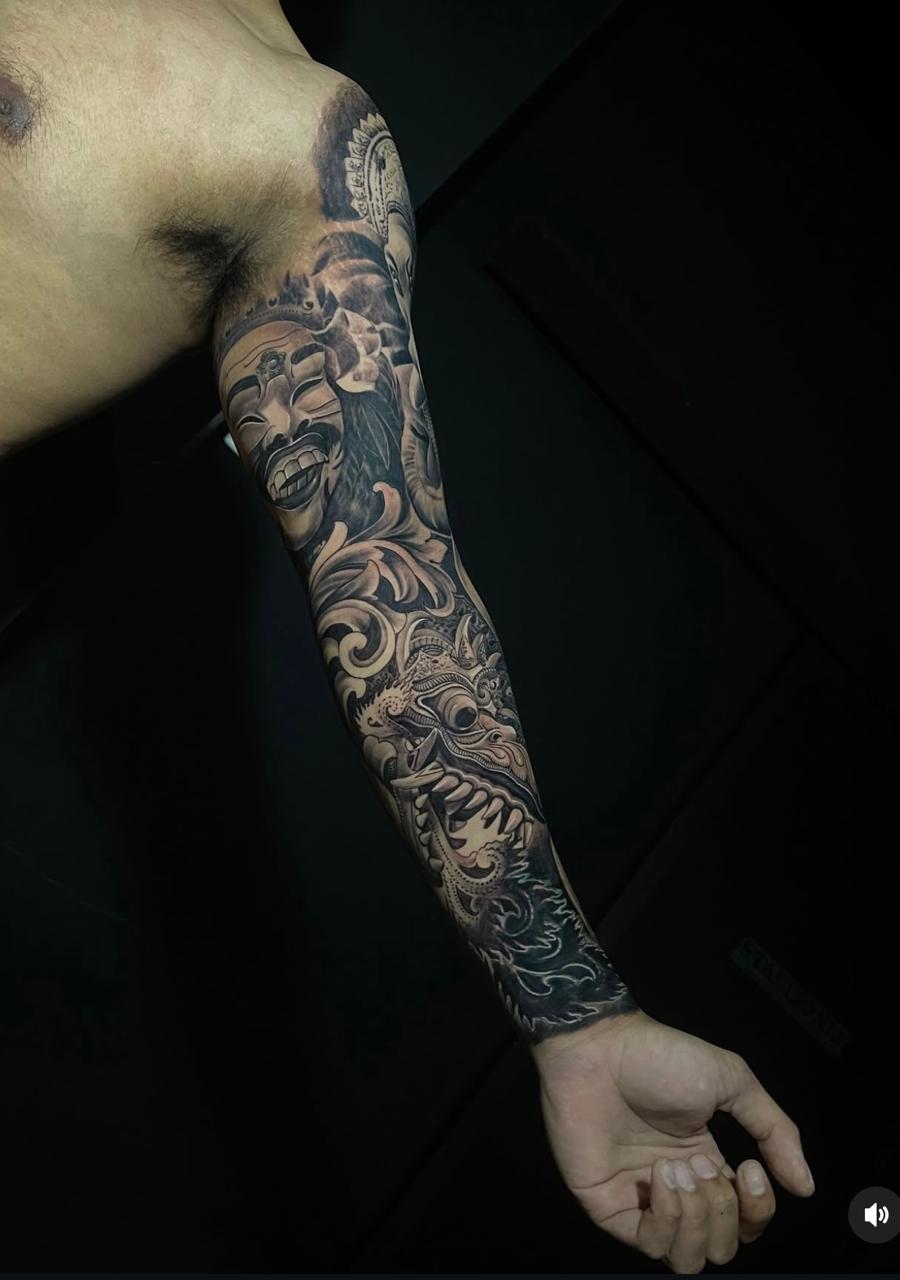
Balinese, Japanese, Polynesian, or Egyptian designs that share a cultural language. Each piece can stand alone, but the visual vocabulary — masks, patterns, symbols, figures — means they read as a family.
Journal of Interests
Film characters, book quotes, song lyrics, travel memories, pet portraits, hobby references. This approach works best when anchored by a consistent style and palette. The style is what unites them.
The Art of the Gap Fill
As your sleeve grows, you'll end up with spaces between pieces. This is normal — and it's actually an opportunity. Gap fills are where sleeves start to feel truly intentional.
Common gap fill elements include:
- Filigree and ornamentation — decorative swirls, borders, and scrollwork
- Pattern and texture — dotwork, cross-hatching, geometric patterns
- Smoke, clouds, and water — soft, organic fills that create transition
- Vines, branches, and thorns — botanical connectors that wrap pieces together
- Script and lettering — quotes, dates, names, or single words
- Micro icons — small symbols, sigils, and mini motifs
The key to good gap filling is timing. Don't fill every space immediately. Leave room to grow — you might want a new piece in one of those gaps a year from now. Fill only the spaces that genuinely feel like they need connecting.
When to Blend Styles (and When Not To)
Mixing styles in one sleeve can feel electric when it works — and cluttered when it doesn't. Here's our rule of thumb:
Style mixing works when:
- You have a clear structural reason (e.g., realism portraits inside an ornamental frame)
- The styles are related (e.g., neo-traditional and illustrative share a lineage)
- You use a consistent palette across everything
Style mixing is risky when:
- Pieces are done by different artists in unrelated styles
- Palettes clash (soft watercolour colour next to heavy dark blackwork, for example)
- There's no compositional or thematic connection
If you want variety, consider a "patchwork" approach from the start. Patchwork sleeves embrace the idea of distinct pieces separated by clear borders or negative space. The inconsistency is the point — it's designed to look like a curated collection rather than a single composition.
The Most Important Rule: Be Patient
The best slow-built sleeves aren't rushed. They're made piece by piece, when the time is right and the idea is ready. Some of our favourite sleeves in the studio have taken three, four, five years to complete — and every gap, every wait, every new piece added is part of their story.
A sleeve built over time carries the weight of those years in a way a sleeve done in two months simply can't. It's not a race. It's a collection.
If you're thinking about starting a slow sleeve — or if you've already started one and want help planning the next piece — book a consultation with us. We'd love to look at what you have, talk about where it's going, and help you build something that feels truly yours.