A Mythology Built for Ink
Few source materials translate to skin as naturally as Greek mythology. Thousands of years of storytelling have produced instantly recognisable figures, dramatic narratives, and a visual vocabulary — laurel wreaths, columns, thunderbolts, serpents, wings — that tattoo artists have drawn on for as long as the craft has existed. It's mythology built for image-making, which is exactly why it endures as a tattoo subject.
Popular Figures and What They Represent
Zeus — king of the gods, associated with authority, thunder, and command. A common choice for those wanting to express strength or leadership.
Medusa — once a symbol of monstrous punishment, now widely reclaimed as an emblem of resilience, protection, and reclaiming one's own narrative.
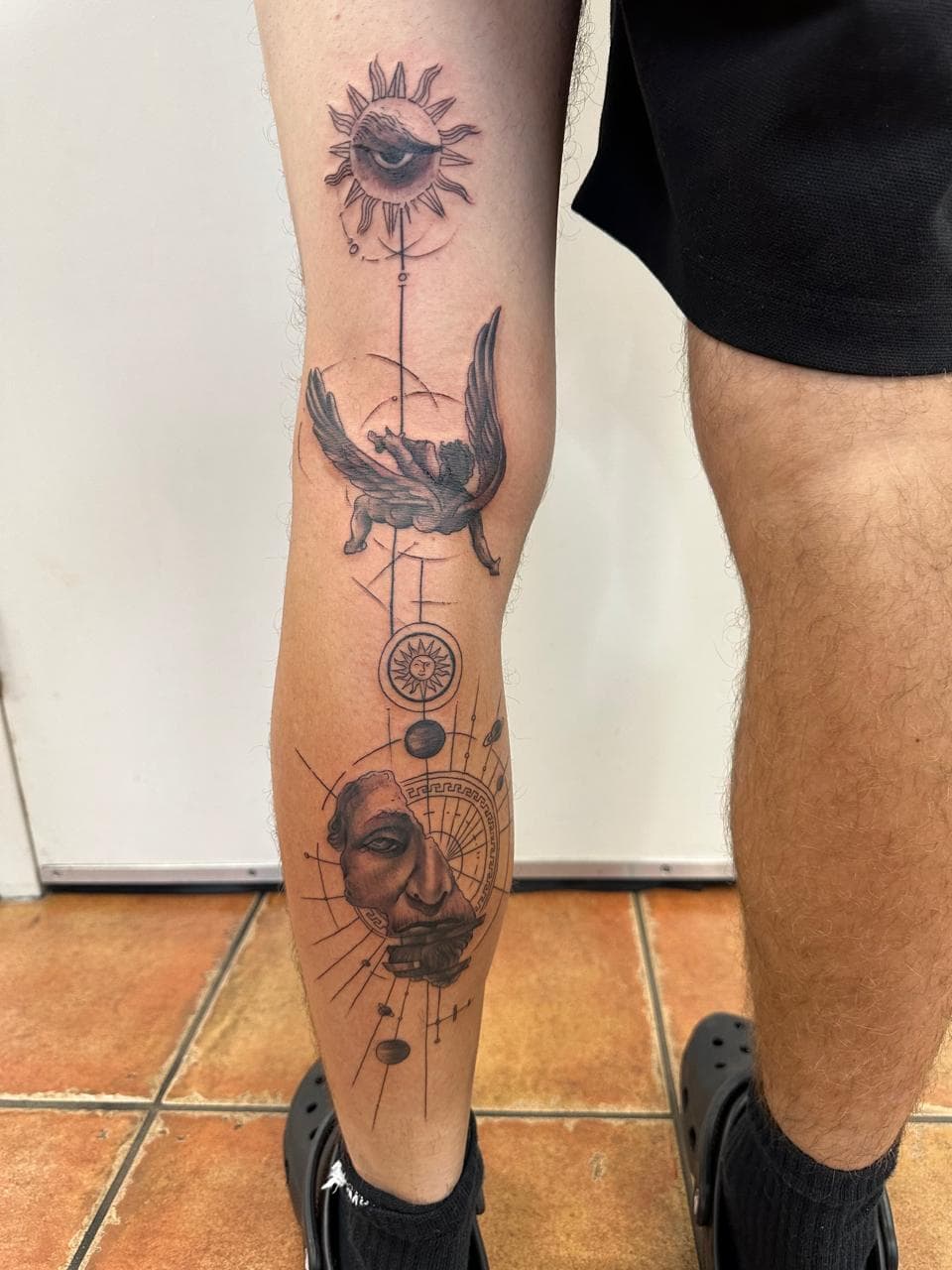
Icarus — the boy who flew too close to the sun. A favourite for those drawn to themes of ambition, hubris, and the beauty found in failure.
Athena — goddess of wisdom and strategic warfare, often chosen for her balance of intellect and strength.
Hades and Persephone — the mythology's most enduring meditation on love, the underworld, and transformation. Popular among couples and as symbols of personal change.
Choosing a Style That Fits
Greek mythology tattoos are rendered across almost every style, but a few pairings stand out:
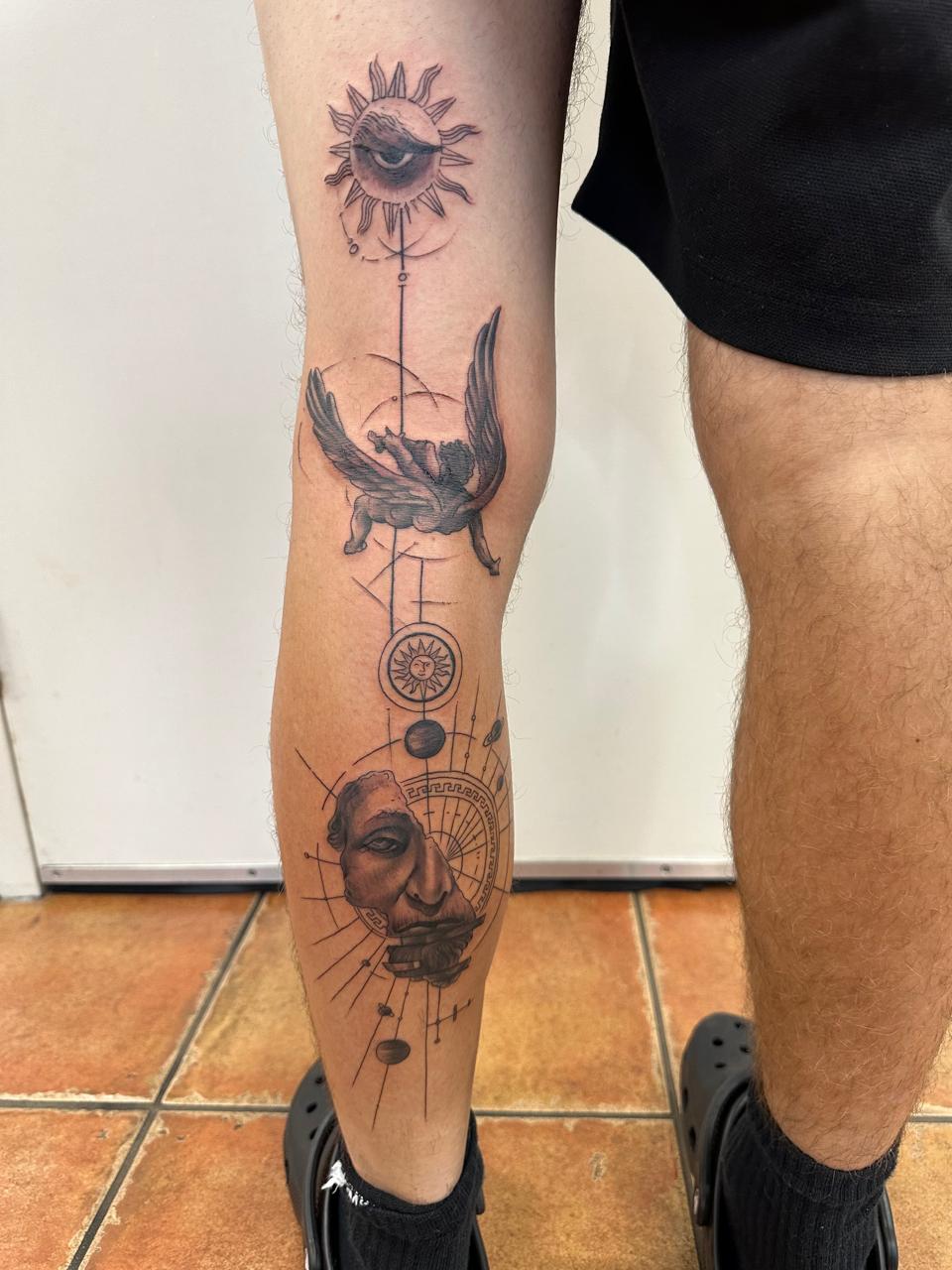
- Black and grey realism brings out the drama and musculature of classical sculpture — ideal for gods, warriors, and mythological battles.
- Fine line suits smaller, more intimate scenes — a single figure, a symbolic object like an olive branch or arrow, or a portrait rendered with restraint.
- Neo-traditional adds bold colour and stylisation, giving mythological figures a more graphic, contemporary edge.
The right choice depends on scale and placement as much as personal taste. A full battle scene with multiple figures needs the real estate of a sleeve or back piece; a single symbolic element can work beautifully as a smaller piece on the forearm or calf.
Beyond the Gods: Symbols and Motifs
Not every Greek mythology tattoo needs to depict a deity. Many clients are drawn to smaller symbolic elements instead:
- The labyrinth — complexity, challenge, and the journey toward a center.
- Wings of Icarus or Hermes — ambition, freedom, or messages carried between worlds.
- The Ouroboros — the serpent eating its own tail, representing eternity and cyclical renewal.
- Laurel wreaths — victory, honour, and achievement.
These smaller motifs are excellent entry points if you love the mythology but aren't ready to commit to a large figural piece.
Getting the Reference Right
Greek mythology has been illustrated across thousands of years of art history, from classical sculpture to Renaissance painting to modern illustration. Bring reference images that reflect the specific tone you want — dramatic and sculptural, painterly and romantic, or graphic and modern. The clearer your reference, the more precisely your artist can translate it into a tattoo that holds up over decades.
At Felicidad Tattoo Studio in Darwin, we work extensively in black and grey realism and fine line — both well suited to mythological subject matter. Book a consultation and let's bring your favourite story to life.