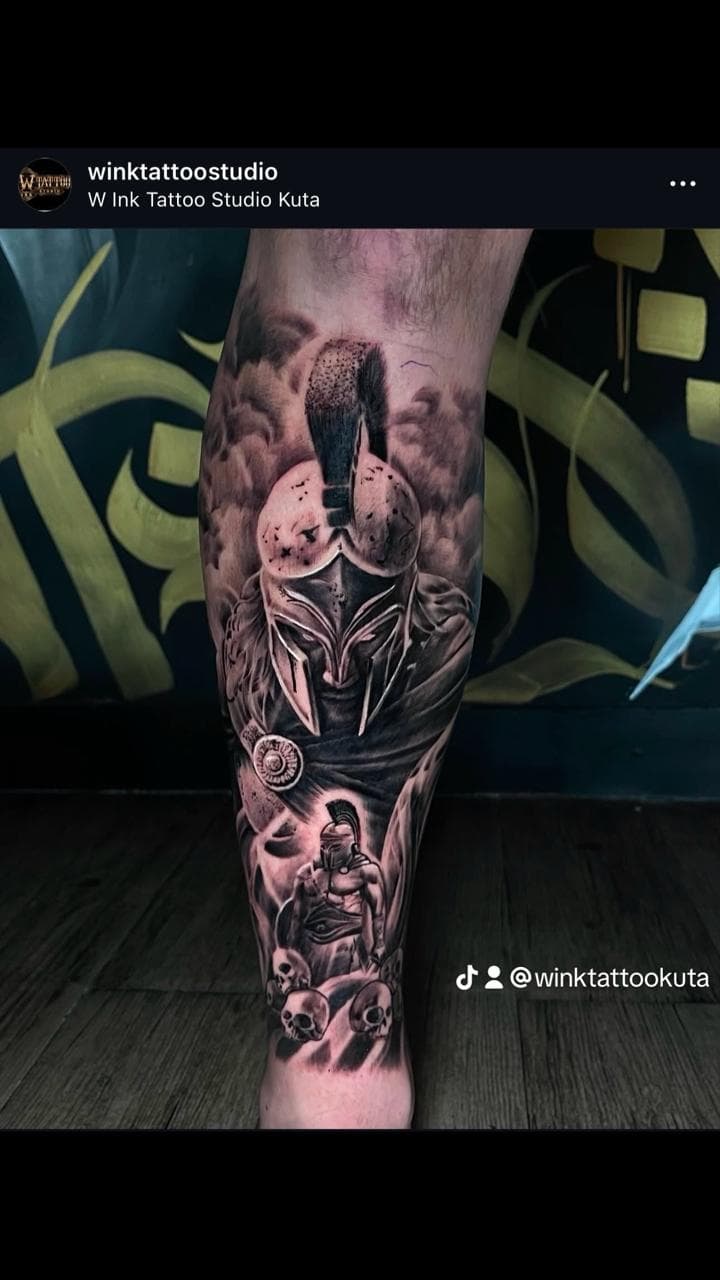
The Timeless Power of Classical Antiquity
Few themes in modern tattooing carry the dramatic gravitas of Ancient Greece. From the fierce martial ethos of Sparta to the titanic narratives of Mount Olympus, Greek mythology and historical warrior imagery offer endless inspiration for high-impact tattoo art.
These designs resonate because they are not merely decorative — they embody archetypal human struggles: resilience, fate, honor, hubris, and mastery over adversity. For collectors looking for a commanding, narrative-driven piece, Greek and Spartan themes provide an unmatched visual vocabulary.
Key Motifs and Their Meanings
The pantheon of Greek myth and history is vast, but several motifs have become enduring staples in black and grey realism:
1. The Spartan Hoplite and Corinthian Helmet
Spartan imagery represents unwavering discipline, brotherhood, and the refusal to yield in the face of overwhelming odds. The iconic Corinthian helmet, with its high horsehair crest and sharp ocular slits, is one of the most recognizable silhouettes in history. Rendered with battle scars, dented bronze texture, and shadowy eyes, it exudes quiet strength.
2. The Gods of Olympus (Zeus & Poseidon)
- Zeus: The King of the Gods embodies sovereignty, divine authority, and raw storm power. He is typically depicted with a flowing, marble-like beard, a crown of laurel, and lightning bolts in hand.
- Poseidon: Ruler of the seas, oceans, and earthquakes. Featuring rolling ocean swells, fierce sea monsters, and the trident, Poseidon represents elemental power, depth, and untamed nature.
3. Medusa and the Gorgons
Medusa has evolved into one of the most popular tattoo subjects worldwide. Originally a symbol of protective warding (the Gorgoneion), modern interpretations embrace Medusa as an emblem of female power, transformation, and survival against injustice. The contrast of delicate facial beauty with writhing, detailed serpents creates an irresistible visual tension.
4. Classical Marble Statues
Rather than illustrating gods as living human portraits, many collectors choose to render them as weathered Classical Greek and Hellenistic statues. The cracked marble textures, missing limbs, and chiseled stone drapes add a romantic, melancholic layer of timelessness to the tattoo.
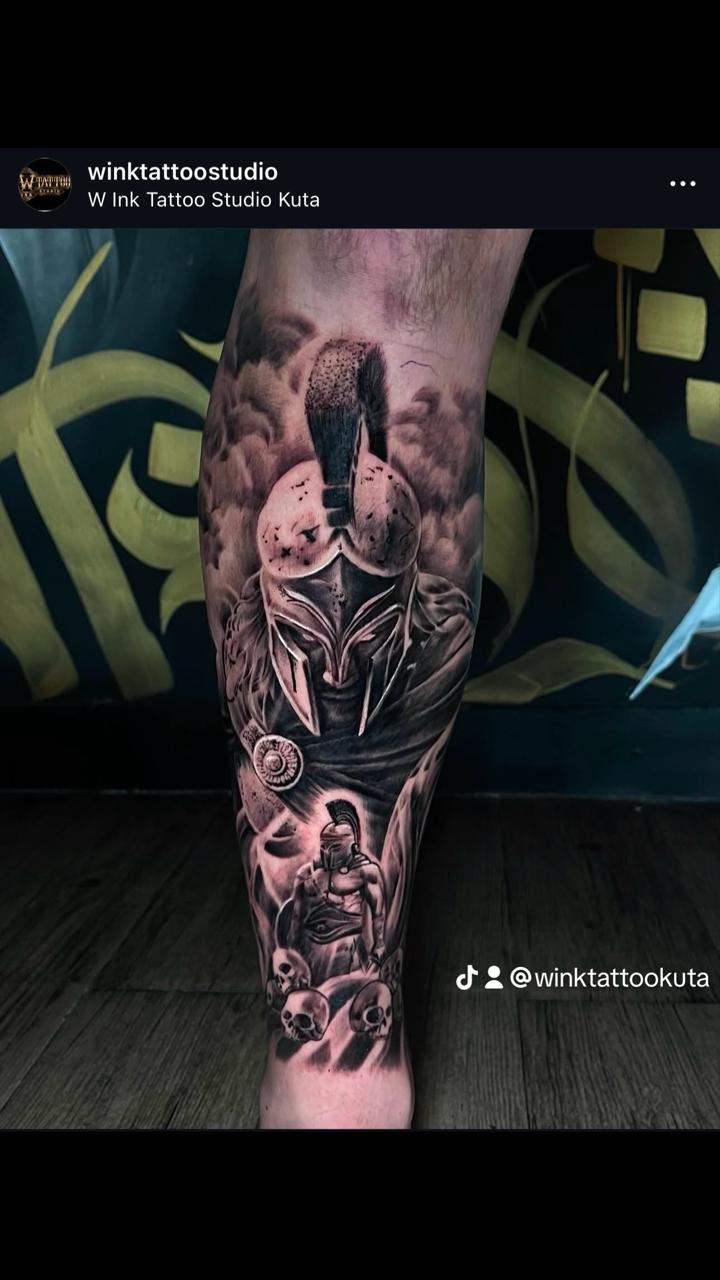
Black and Grey Realism: The Ideal Register
While neo-traditional and fine-line interpretations exist, black and grey realism is the definitive medium for Greek and Spartan tattoos.
Here is why greyscale realism elevates ancient mythology:
- Sculptural Chiaroscuro: The high contrast between deep charcoal blacks, soft mid-tone shading, and stark negative skin highlights mimics the dramatic lighting found in Renaissance and Neoclassical sculpture.
- Material Textures: Realism allows the tattoo artist to differentiate between the cool smoothness of polished marble, the gritty, hammered patina of aged bronze armor, and the organic flow of hair and beard locks.
- Enduring Longevity: High-contrast black and grey holds its structural integrity exceptionally well over decades, ensuring detailed facial features and armor engravings remain readable as the tattoo matures.
Placement and Anatomical Flow
Because Greek mythology pieces often feature complex subjects with multiple interacting elements, thoughtful placement is essential:
- Leg and Thigh Pieces: The large, flat planes of the thigh and outer calf provide the ideal canvas for standalone warrior portraits, full-body hoplites, or towering marble statues.
- Full Sleeves: A full arm allows for a seamless vertical narrative — for example, Olympus and Zeus at the shoulder transitioning down through battle scenes on the forearm to Poseidon's turbulent waves at the wrist.
- Chest and Back Panels: The pectoral muscles naturally accommodate symmetrical warrior shields, helmet profiles, or expansive battle scenes across the torso.
Avoiding Common Design Traps
To ensure your Greek or Spartan tattoo stands out as a genuine work of custom art, keep these principles in mind:
- Avoid Overcrowding: Trying to fit Zeus, Medusa, Achilles, a temple, and three quotes onto a single forearm will result in visual clutter. Give each focal element enough breathing room to maintain contrast.
- Prioritize Lighting Direction: Ensure that all elements in a multi-figure composition share a consistent light source. Conflicting shadows will make the composition feel disjointed.
- Use Authentic Reference Art: Rather than copying existing tattoos from social media, look to classical museum sculptures, historical archaeological artifacts, and fine art master paintings for original, high-definition references.
Create Your Mythological Masterpiece in Darwin
Bringing ancient Greek mythology to life requires an artist with a master's understanding of anatomy, light physics, and tonal contrast.
At Felicidad Tattoo Studio in Darwin, our black and grey realism specialists work closely with you to design a custom piece that tells your story with the dignity and power of classical antiquity. Book a consultation today to begin designing your piece.