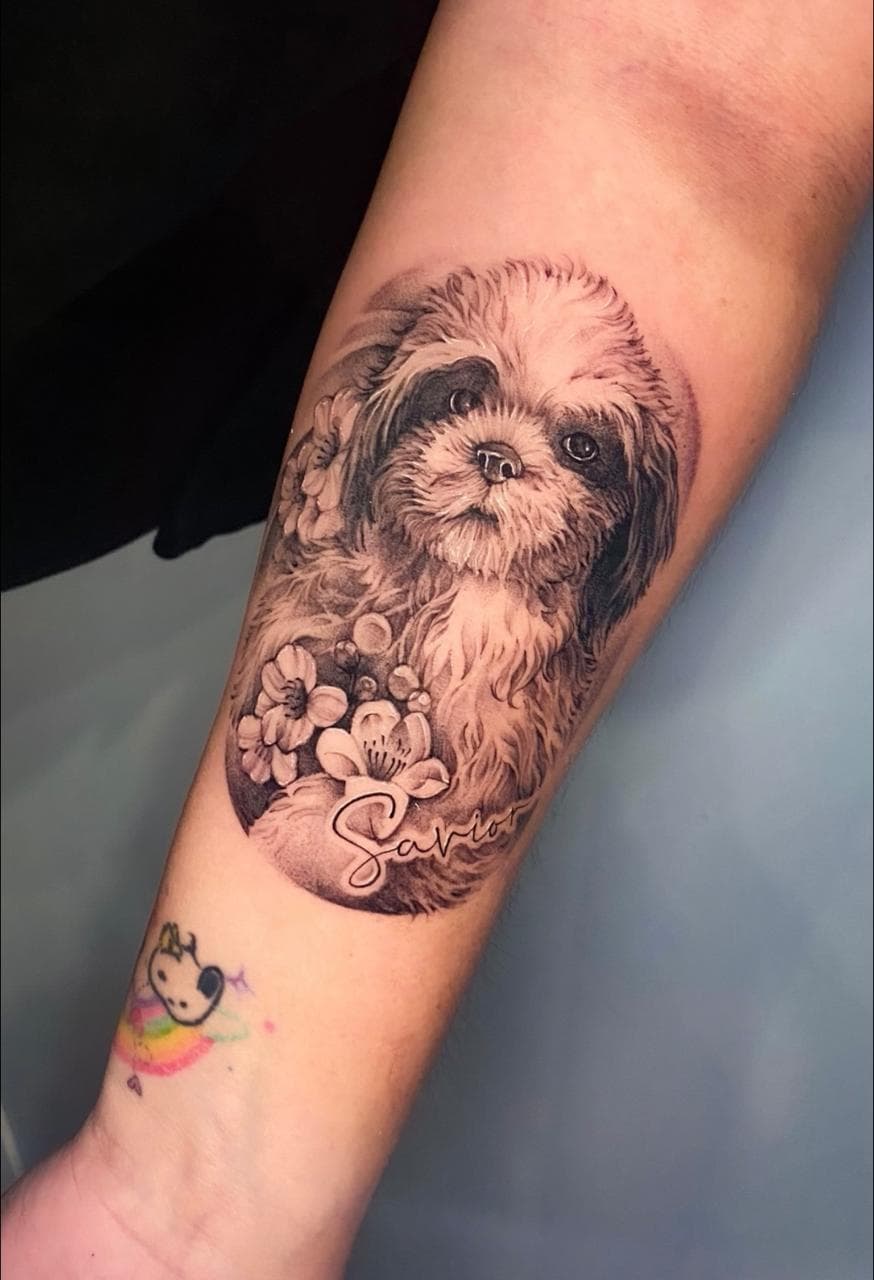
One of the Most Personal Tattoos You Can Get
Pet portraits hold a special place in tattooing. For many people, their pet is family — and a portrait tattoo is a way to carry that bond permanently. Done well, a pet portrait is one of the most striking and emotionally resonant tattoos possible. Done poorly, it's one of the hardest to look at.
The difference comes down almost entirely to the artist and the reference material.
Why Pet Portraits Are Technically Demanding
Portrait work — whether of people or animals — requires an artist who can accurately capture likeness. This is a specific skill that not all tattooers possess, regardless of how accomplished they are in other styles.
Animal portraits add their own layer of complexity:
- Fur texture requires a convincing simulation of layered strands using precise needle technique — it can't be faked with flat shading
- Eyes are the soul of any portrait; slight inaccuracies in the catch light or iris shape can make the entire piece feel off
- Colour variation in coats — brindles, merles, tabbies, and tortoiseshells require careful management of tonal range
- Likeness over aesthetics — the goal isn't just a beautiful animal, it's your animal. The artist must capture the specific character of that individual creature
This is why choosing the right artist for a portrait is more important than for almost any other style.
Choosing Your Artist
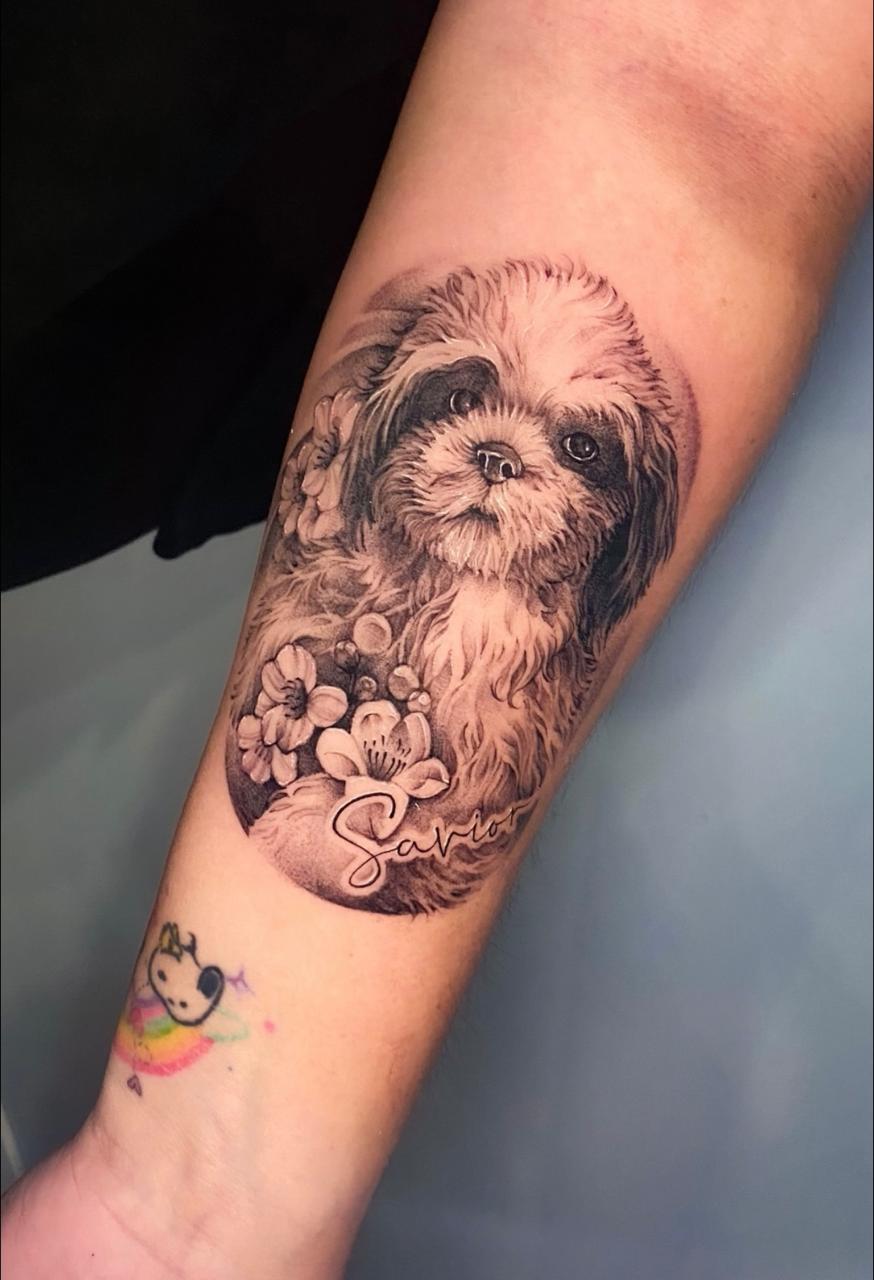
Look specifically for an artist with a strong portfolio of healed portrait work — particularly animal portraits. Fresh portrait tattoos always look sharp; the real test is how they settle after healing.
Check for:
- Clean, confident fur rendering — individual strokes should be visible, not blended into grey mass
- Accurate, lifelike eyes with proper depth
- Contrast — good portrait work has strong dark-to-light range, not a flat mid-tone muddle
- Healed examples, not just fresh
If an artist has only one or two portraits in their portfolio, or none involving animals, ask for more examples before committing.
Getting the Best Reference Photos
The reference photo you provide is the single biggest factor in your result beyond the artist's skill. A bad photo will limit even the most talented realism artist.
What makes a great reference photo:
- Sharp focus — blurry or pixelated images make fine detail impossible to capture accurately
- Good lighting — natural light, front-facing, with no harsh shadows across the face
- Clear eyes — the eyes need to be in focus and well-lit; this is non-negotiable for a lifelike result
- High resolution — use the original file from your phone camera, not a compressed screenshot
- Neutral background — a cluttered background can make it harder to define the subject cleanly
If you don't have a photo that meets these criteria, take a new one. Spend time with it. The investment is worth it.
Black and Grey vs. Colour
Most pet portraits are done in black and grey — it handles fur texture beautifully and ages well. Colour portraits are absolutely achievable for animals with distinctive colouring (orange tabby cats, golden retrievers, red merle border collies) but require a colour realism specialist.
Discuss both options with your artist and look at examples of each in their portfolio.
Placement Considerations
Portrait tattoos work best on flat, relatively still surfaces:
- Upper arm and outer bicep — the most popular placement; flat, readable, and ageable well
- Thigh — large canvas with minimal distortion
- Calf — good for portrait-oriented compositions
- Chest — works well but expect more sensitivity during the session
Avoid highly curved or mobile areas — the distortion on joints or the inner elbow can compromise the likeness over time.
A Note on Timing
Many clients book a pet portrait while their pet is still alive — and we think this is a wonderful idea. You'll have access to multiple reference photos, you can choose the one that captures their best expression, and the piece becomes a celebration rather than a memorial.
Either way, the intention is the same: to carry someone you love with you, permanently.