The Legitimacy of Loving Something
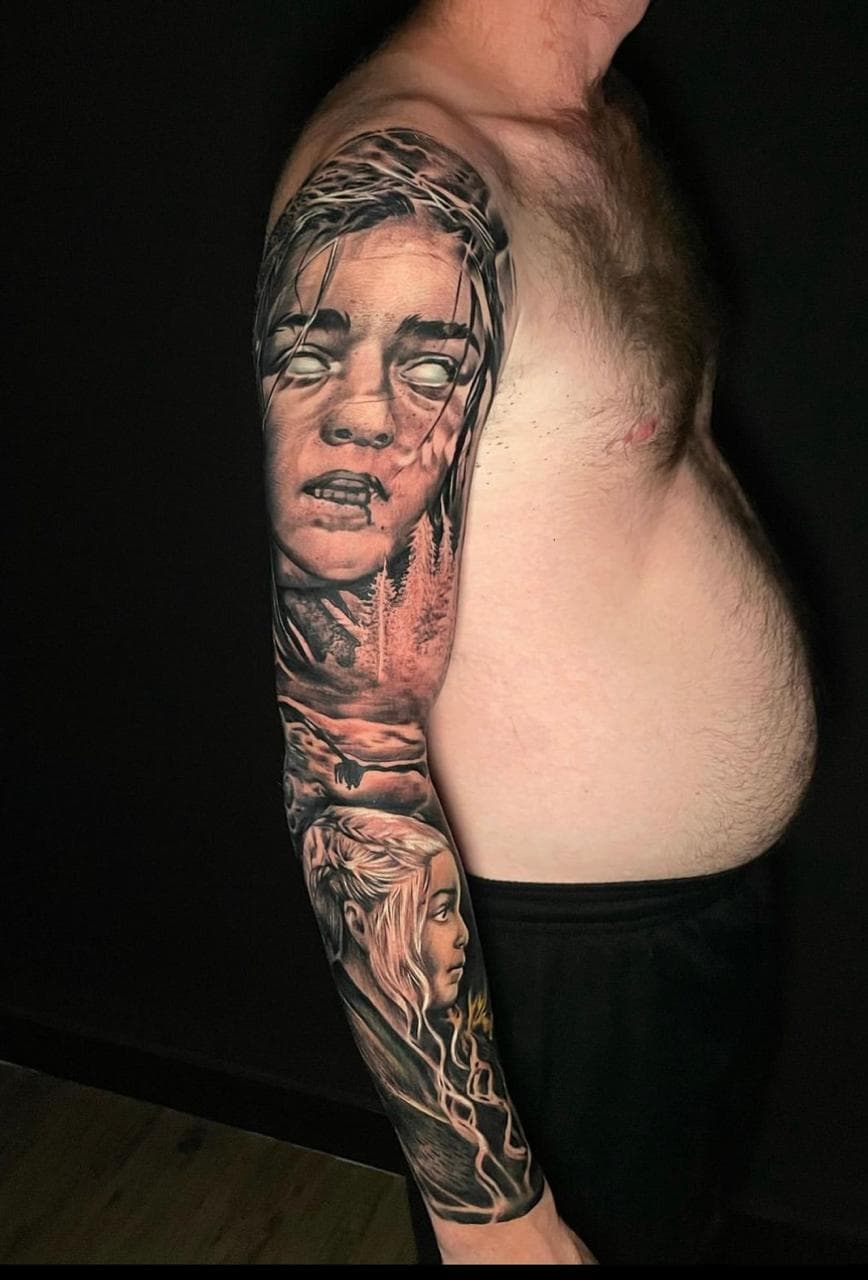
There's a persistent idea in some tattoo circles that fandom tattoos are somehow less serious than other work. This misses the point entirely.
A tattoo represents something that matters to you. For many people, that's a story, a character, a world — a piece of art that shaped how they see things, got them through a difficult period, or simply brings them joy every time they return to it. That's exactly what a tattoo should be.
The question isn't whether to get a fandom tattoo. It's how to get one that does the subject justice.
Two Approaches: Literal and Interpretive
When it comes to tattooing characters, franchises, or fictional worlds, there are broadly two approaches.
Literal — a faithful rendering of a character, scene, or iconic image from the source material. A portrait-quality piece of a beloved character. A detailed recreation of a memorable scene. A recognisable symbol or emblem from the world.
Interpretive — using the visual language of the fandom as inspiration while creating something original. A character rendered in a different tattoo style. A landscape from a fictional world reinterpreted as a fine line botanical. A symbol deconstructed into geometric form.
Neither is superior. Your choice depends on how you want to relate to the source material — do you want an exact tribute, or something that's uniquely yours?
Choosing the Right Style for the Subject
Not every tattoo style suits every fandom.
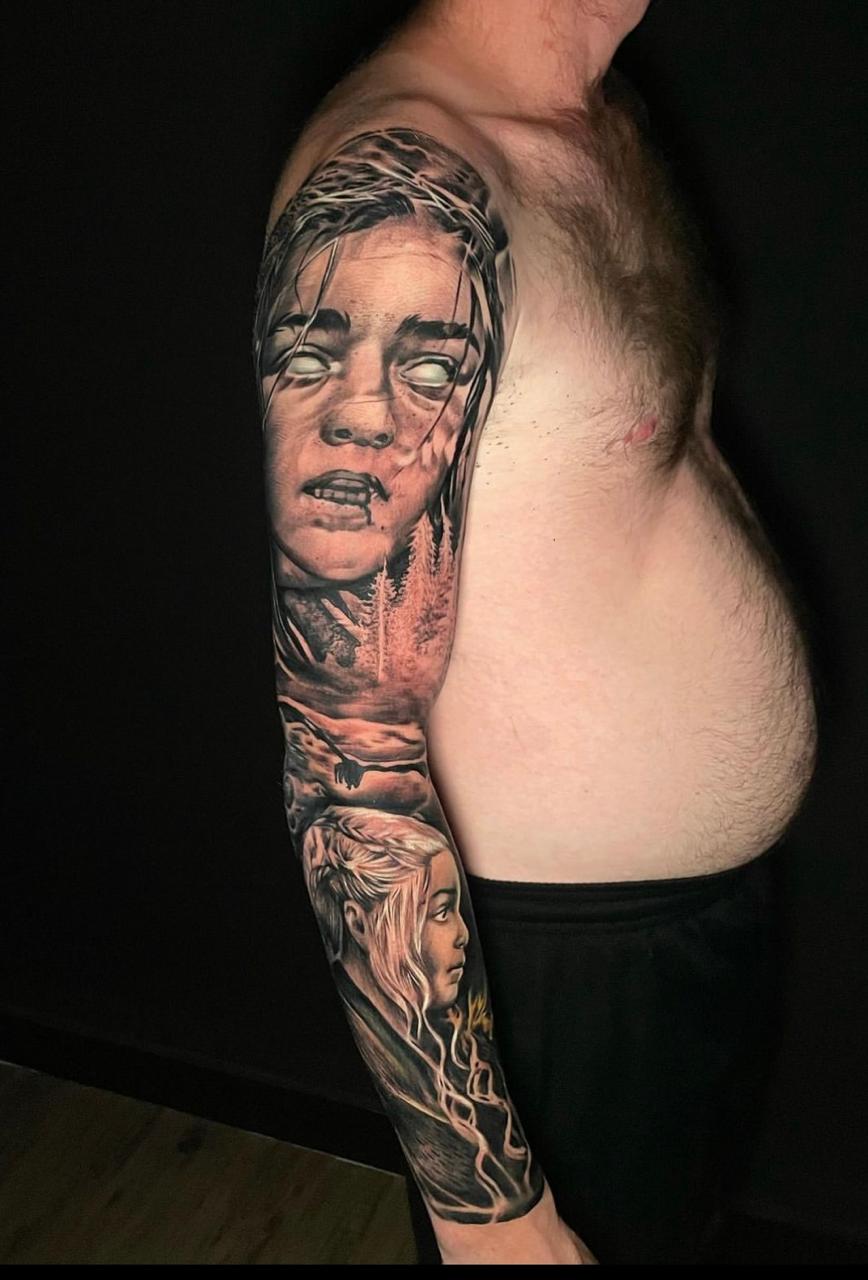
Black and grey realism works brilliantly for character portraits, dramatic scenes, and franchises with dark, cinematic aesthetics — epic fantasy, sci-fi, horror, and superhero content all translate well into this style.
Illustrative suits animation, graphic novel, and video game sources — particularly where the original art has a hand-drawn quality.
Fine line can be used for minimalist interpretations — a single iconic object, a quote, a simple symbol rendered with delicate precision.
Neo-traditional brings bold colour and graphic energy, well-suited to comics and animated sources.
The strongest fandom tattoos take the style that best suits the feeling of the source material and execute it at the highest level.
Working With Your Artist
A few things to think through before your consultation:
Bring reference — but stay open. Show your artist the source material, key images, and what aspects matter most to you. Then listen to their suggestions. A skilled artist will often have ideas for how to adapt the material into a tattoo composition that's stronger than a direct copy.
Think about longevity. Pop culture ebbs and flows. Before committing to something highly specific, consider whether this is a brief enthusiasm or a deep, lasting connection. Great tattoos are ones you're still proud of in twenty years.
Consider scale and detail. Character portraits require enough space to capture likeness properly. Intricate franchise imagery with fine detail needs adequate real estate to remain legible as it ages. Don't compress a complex scene onto a tiny patch of skin.
Think beyond the obvious. The most interesting fandom tattoos often aren't the most literal. A thematic element — a texture, a colour palette, a recurring motif — can communicate the reference to those who know it while reading beautifully to everyone else.
The "Will You Regret It?" Question
People who love fandom tattoos are tired of this question, and rightly so. The premise — that deep attachment to a story or character is frivolous — doesn't hold up.
The more useful question is: will you still love this? Not in five years, necessarily. In twenty. Is this a passing phase or something woven into who you are?
Only you can answer that. And if the answer is yes — if this franchise, character, or story is genuinely part of you — then there's no better reason for a tattoo to exist.