The Appeal of Dark Imagery
Gothic and horror-inspired tattooing occupies a distinct space in the art form. Where other styles pursue beauty, symmetry, or decorative elegance, dark tattoos often lean into tension, shadow, and the uncanny. The appeal is personal — for many people, this imagery reflects something authentic about their inner life, their relationship with mortality, or the art and literature they love.
Done with skill, a dark tattoo is not grim — it is dramatic, evocative, and often hauntingly beautiful.
What Falls Under This Style?
The category is broad. Common themes include:
- Horror iconography — skulls, ravens, demons, monsters, and figures from horror cinema
- Gothic architecture — cathedrals, gargoyles, and shadowy cityscapes
- Religious and occult imagery — dark angels, fallen figures, sigils, and sacred geometry with a sinister edge
- Memento mori — hourglasses, clocks, dead flowers, and other symbols of mortality
- Literary and cinematic references — figures from classic horror literature or cult film
The aesthetic often draws from Romanticism, Victorian mourning culture, and the visual language of horror as a genre.
Technique and Rendering Style
Most dark gothic tattoos are executed in black and grey realism or a dark illustrative approach. Both rely on dramatic contrast — deep shadows, tight linework, and careful tonal control — to build atmosphere.
Black and grey realism can render horror subject matter with photographic intensity, making portraits of demons, skulls, or supernatural figures look genuinely three-dimensional. Dark illustrative work tends toward more stylised rendering, often borrowing from comic book art, woodblock prints, or engraving aesthetics.
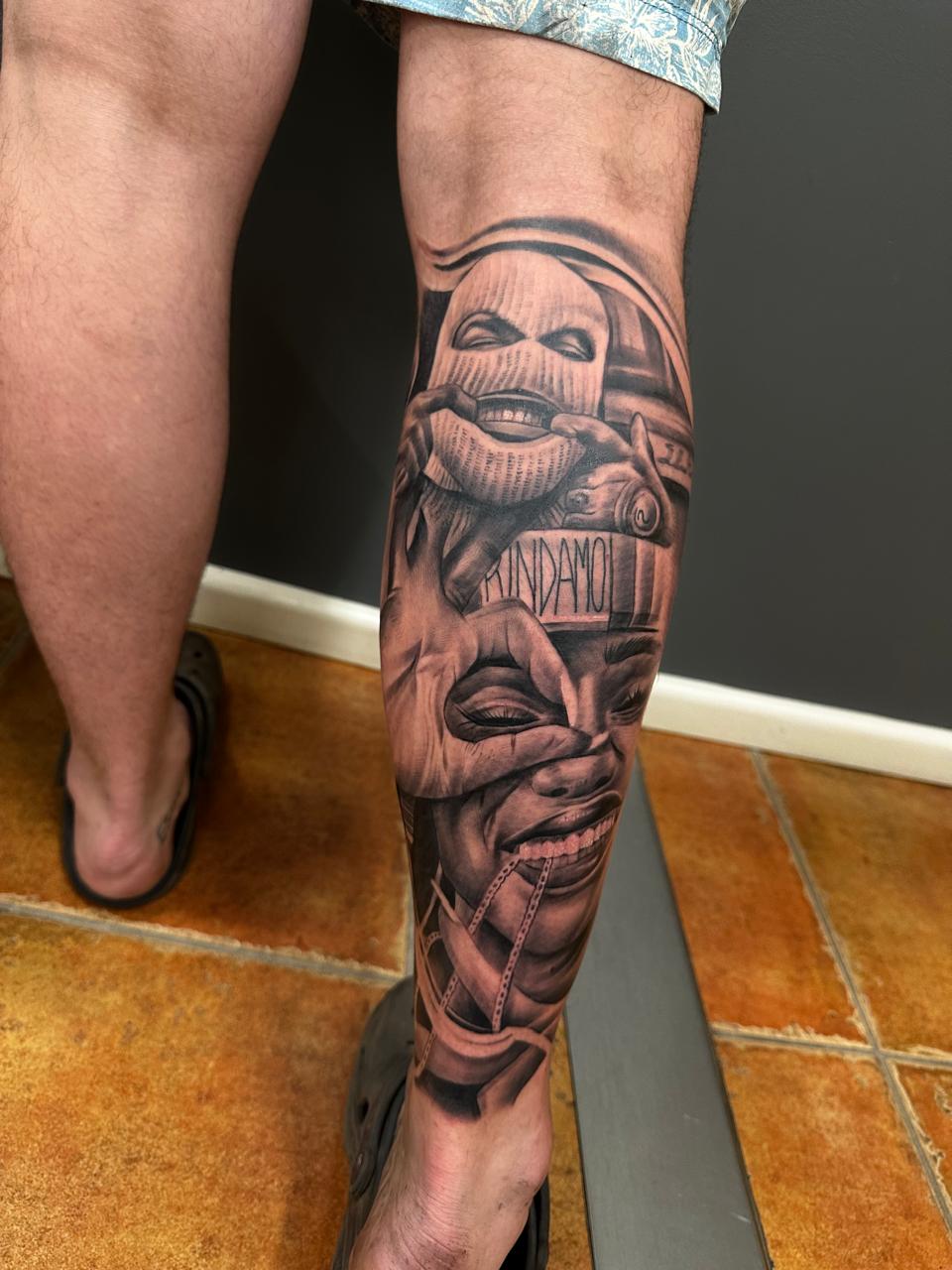
Colour is rarely central to this style. When it does appear, it tends to be used sparingly — a flash of red, a deep jewel tone — for maximum contrast against the predominantly dark composition.
Placement and Scale
Dark and gothic tattoos often work best at larger scales, where the complexity of the imagery has room to breathe. Large panels on the thigh, calf, chest, or back allow for multi-element compositions: a central figure surrounded by architectural detail, flowing smoke, or natural elements like dead trees and ravens.
Smaller standalone pieces also work well — a skull, a raven perched on a branch, or a single dark floral. These can be placed on the forearm, upper arm, or as standalone pieces that may later become part of a larger collection.
Choosing the Right Artist
Dark subject matter requires an artist who is skilled in:
- Shadow and contrast — the ability to build deep, rich blacks without the design becoming muddy
- Compositional clarity — keeping complex, multi-element pieces legible
- Atmospheric rendering — capturing mood, not just likeness
When researching artists, look specifically for examples of dark or gothic work in their portfolio. The skills that make a beautiful floral piece aren't identical to the skills that make a compelling horror composition.
Personalising Dark Imagery
The most resonant dark tattoos connect to something specific — a book, a film, a piece of music, a personal experience. Generic skull imagery exists in abundance; what makes a dark tattoo exceptional is when the imagery carries meaning for the person wearing it.
Consider working with your artist to incorporate:
- Personal symbols alongside darker elements
- Specific literary or cinematic references that have meaning to you
- A narrative structure — multiple elements that tell a story rather than sitting as separate motifs
At Felicidad Tattoo Studio in Darwin, we have experience bringing dark and gothic concepts to life with skill and care. Book a consultation to discuss your ideas.