A Style Rooted in Story and Spirit
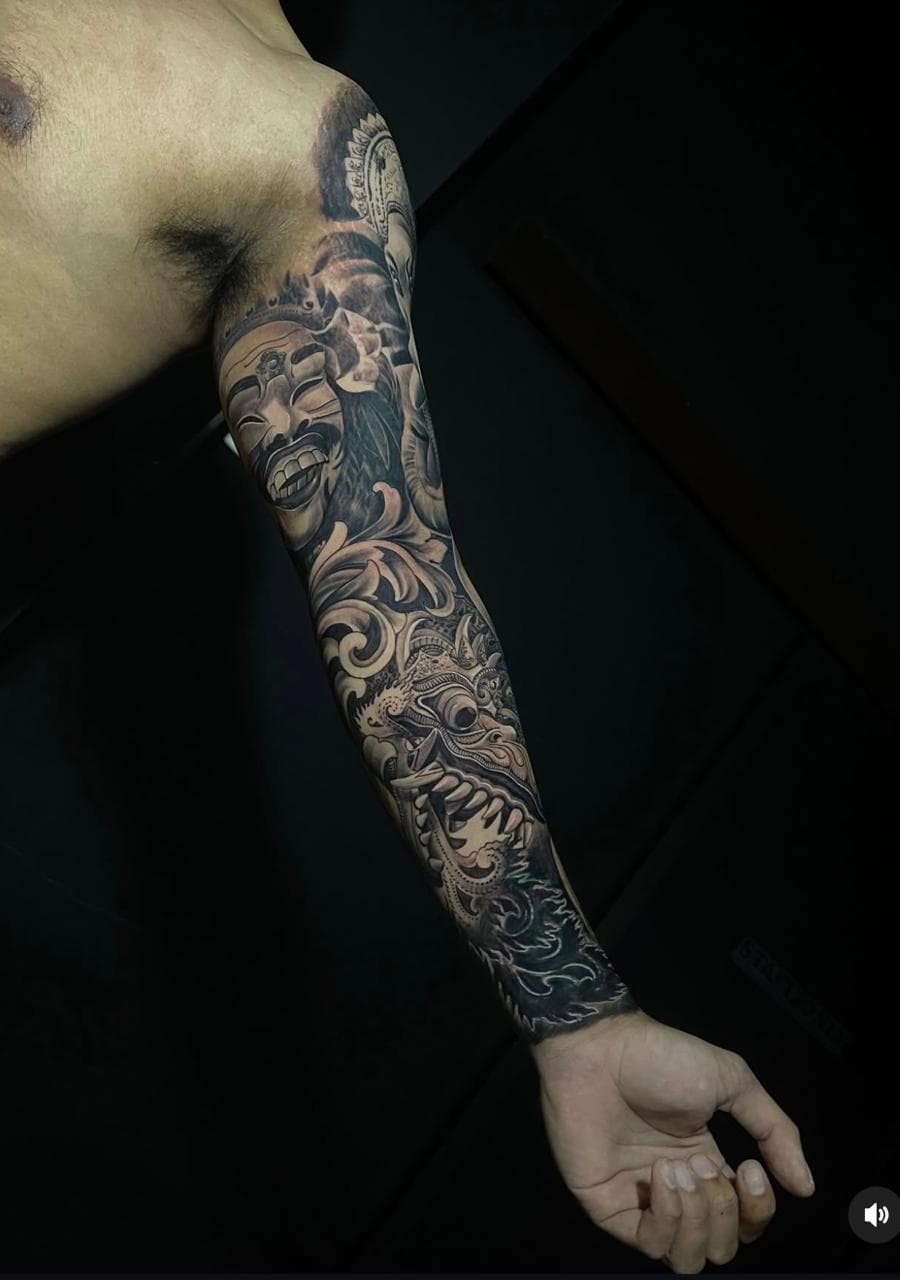
Balinese traditional tattooing draws from a deep well of Indonesian mythology, folklore, and spiritual symbolism. Unlike styles built primarily around aesthetics, Balinese work is inseparable from narrative — every figure, mask, and pattern carries meaning drawn from centuries of storytelling and ritual. For clients drawn to work with genuine cultural depth, it's one of the most rewarding styles to explore.
Barong and Rangda: The Central Figures
The most recognisable figures in Balinese traditional tattoo art are Barong and Rangda — two opposing forces from Balinese mythology.
Barong is a protective spirit, often depicted as a lion-like creature with an ornate mane and fierce, benevolent expression. He represents good, protection, and order.
Rangda is his mythological counterpart — a demon queen associated with chaos and dark magic, but not simply "evil" in a Western sense. She represents necessary disruption and the balance that comes from opposing forces coexisting.
Together, Barong and Rangda form one of the most powerful visual and symbolic pairings available in tattoo art — commonly rendered as a full sleeve or back piece to capture the scale and drama of their story.
Visual Characteristics
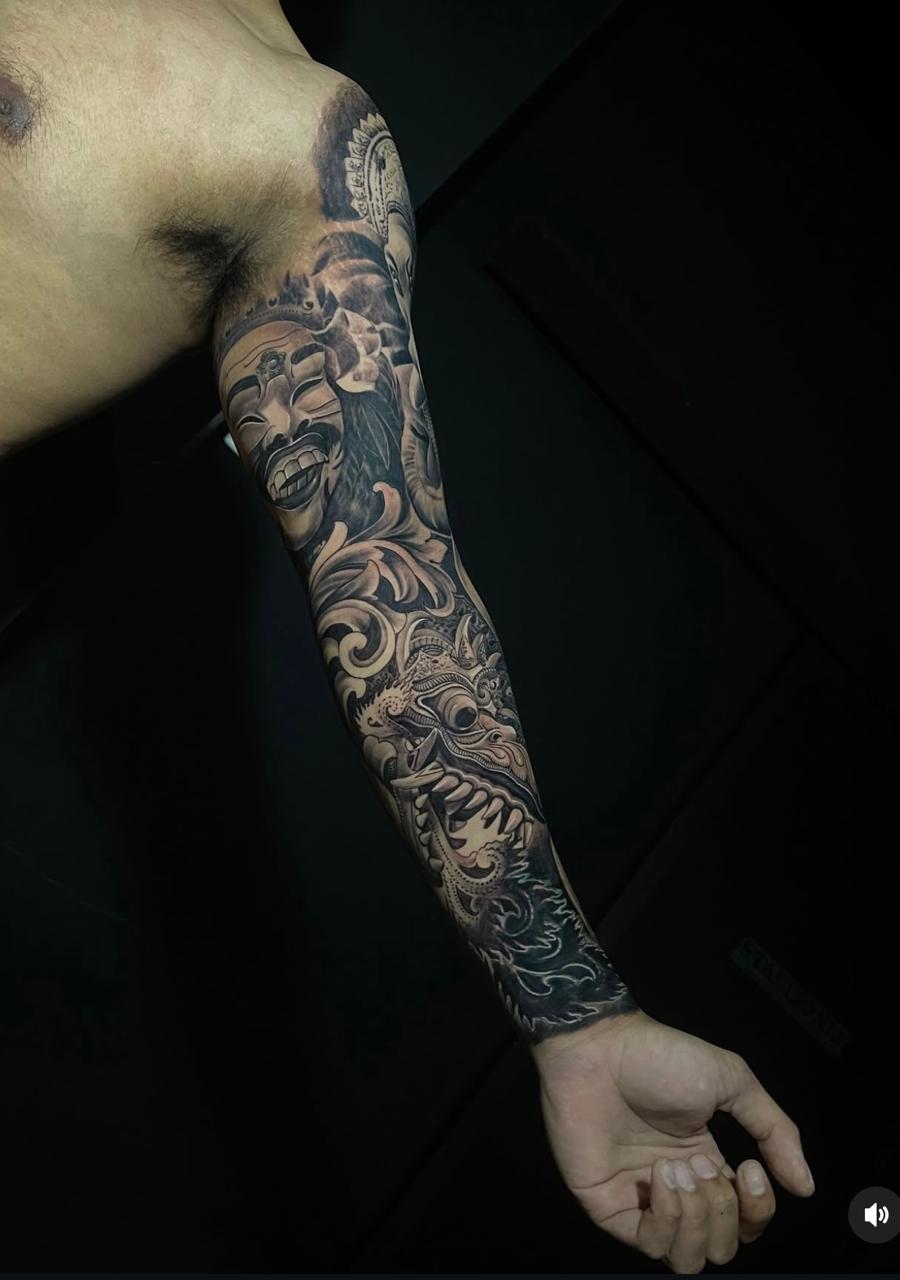
Balinese traditional tattoos share several distinctive features:
- Ornate detail — masks, headdresses, and costuming are rendered with intricate texture and pattern work.
- Bold linework — clear, confident outlines that keep the composition readable at a distance.
- Rich negative space — traditional Balinese design leaves room to breathe, letting key details stand out.
- Symmetry and balance — reflecting the philosophical emphasis on harmony between opposing forces.
Who This Style Suits
Balinese traditional tattoos work best for clients who want a piece with genuine cultural and narrative weight, not just a visually striking image. It also suits those planning large-scale work — the level of detail in figures like Barong and Rangda needs real surface area to hold its impact, making it a strong choice for sleeves, back pieces, or thigh panels.
Respecting the Source
Because this style draws on specific cultural and spiritual traditions, it's worth approaching with genuine curiosity rather than treating the imagery as purely decorative. Talk to your artist about the meaning behind the figures you're considering, and be thoughtful about how and where you place culturally significant imagery.
Planning Your Piece
Balinese traditional work pairs naturally with black and grey realism or illustrative shading techniques, both of which can capture the texture and depth of traditional masks and costuming. Bring reference images of the specific figures or scenes that resonate with you, and be open to your artist's guidance on composition — these pieces often benefit from being built around a larger anatomical canvas rather than compressed into a small space.
At Felicidad Tattoo Studio in Darwin, we love working on culturally rich, narrative-driven pieces like this. Book a consultation and let's talk through what a Balinese-inspired design could look like for you.